Technically yes, but the 'Opening Moves' feature now allows women to set a prompt that men can respond to first, significantly changing the original dynamic.
Only if you live in a high-population city and need filters or Incognito Mode to manage the volume of profiles.
Bumble has the best-in-class photo verification and 'Private Detector' AI, though AI-generated bio text remains a growing issue in 2026.
Once a match is made, the woman (or either party in non-hetero matches) has 24 hours to send a message, and the recipient has 24 hours to respond, or the match expires.
Yes, Bumble BFF is a separate mode within the app specifically for platonic friendships, and it is arguably one of the best tools for that purpose.
As of May 2026, the shine hasn’t just worn off the yellow beehive—it’s started to chip. I’ve spent the last few months living on Bumble’s latest build, navigating the "Opening Moves" era and the aggressive AI integration that was supposed to "fix" dating. The verdict? It remains the most functional of the Big Three (Tinder, Bumble, Hinge), but the cost of entry—both financial and emotional—has never been higher. If you’re looking for a serious relationship, it’s still a viable tool, but the "women make the first move" USP has been so diluted by recent updates that the app is having an identity crisis. Overall Rating: 6.3/10
After a decade of swiping, the shine hasn’t just worn off the yellow beehive—it’s started to chip. I’ve spent the last three months living on Bumble’s 2026 build, navigating the "Opening Moves" era and the aggressive AI integration that was supposed to "fix" dating. The verdict? It remains the most functional of the Big Three (Tinder, Bumble, Hinge), but the cost of entry—both financial and emotional—has never been higher. If you’re looking for a serious relationship, it’s still a viable tool, but the "women make the first move" USP has been so diluted by recent updates that the app is having an identity crisis. Overall Rating: 6.5/10
Sponsored Content
What bumble Is and Who It's For
In 2026, Bumble is no longer just "the feminist Tinder." It has morphed into a sprawling social ecosystem that attempts to be everything to everyone. While the core mechanic—women initiating the conversation—remains the backbone, the introduction of "Opening Moves" (where women set a prompt for men to respond to) has fundamentally shifted the power dynamic. It’s a middle ground designed to solve the "Hey" problem, but it often feels like just another hurdle.
The app is primarily for the 24-to-40-year-old demographic. It’s for the professional who finds Tinder too chaotic and Hinge too curated. It attracts a crowd that generally has their life together—or at least knows how to stage a photo that suggests they do. You’ll find more LinkedIn-style bios here than anywhere else. If you are looking for long-term partnership, Bumble’s algorithm still prioritizes "quality" profiles, but you’ll have to wade through a sea of "Travel Addicts" and "Foodies" to find a genuine spark.
Crucially, Bumble has leaned heavily into its "BFF" and "Bizz" modes. In 2026, BFF is actually more successful than the dating side in many urban hubs, serving as the default tool for people who have moved to a new city and realized that making friends as an adult is harder than finding a spouse. However, for the purposes of this review, we are focusing on the dating side—the place where hope goes to be managed by a 24-hour timer.
The Real User Experience
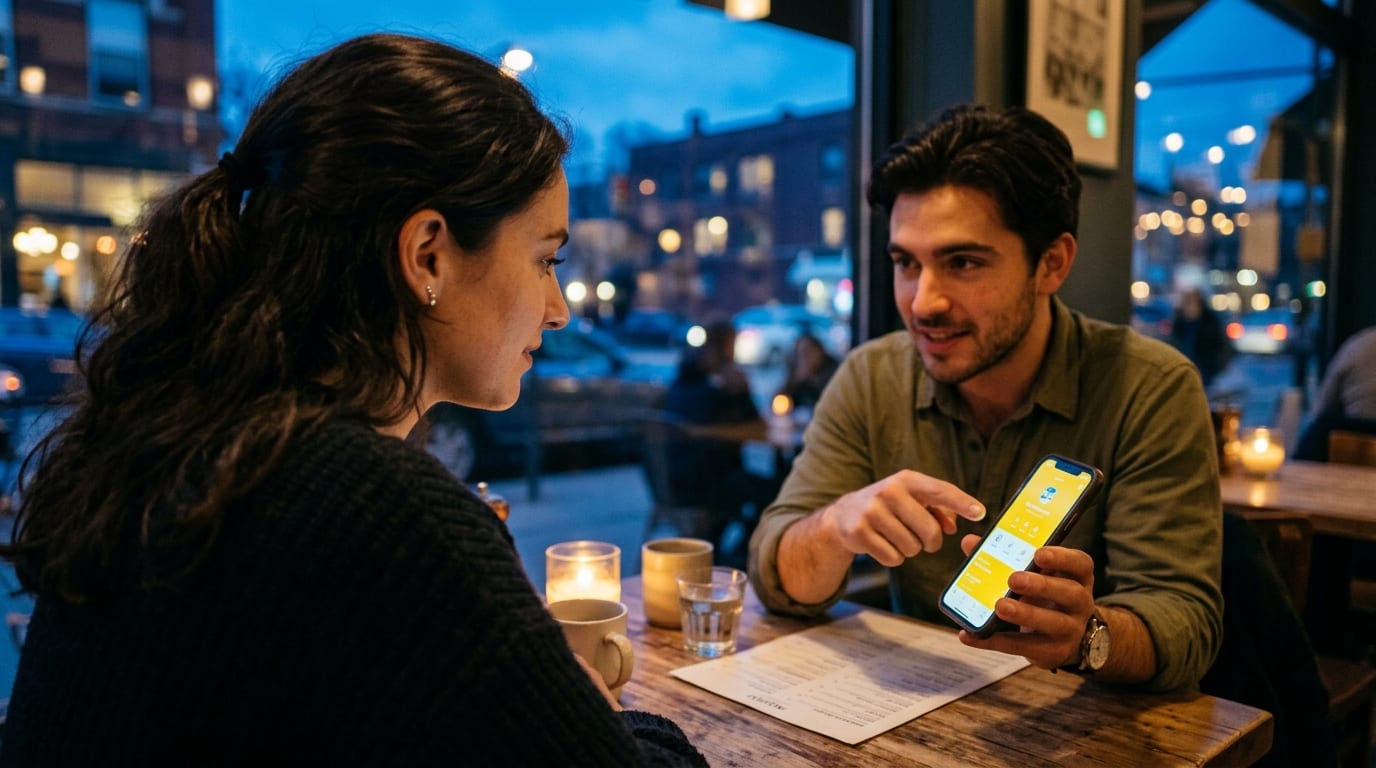
Using Bumble in 2026 feels like a part-time job that pays you in dopamine hits and occasional ghosting. The UI is still the slickest in the game—clean, bright, and intuitive—but the "gamification" has reached a fever pitch. When you open the app, you’re greeted with a barrage of notifications: someone "complimented" your photo, a match is expiring, or there’s a "Spotlight" event happening in your area.
The 24-hour clock is still the defining feature. For some, it’s a productivity tool; for others, it’s a source of low-grade anxiety. As a reviewer, I noticed that the "expiration" rate has increased this season. In May 2026, people are more distracted than ever. I’d say approximately 45% of matches now expire without a word. The "Opening Moves" feature was intended to fix this by allowing men to respond to a prompt immediately, but in practice, it has led to a lot of low-effort, AI-generated responses. I’ve seen the same "witty" response to the "What’s your dream Sunday?" prompt six times in one week. The authenticity is being bled out by the tools meant to help us.
Then there’s the "Vibe Check" video feature. Bumble now pushes short-form video content within profiles. It’s an attempt to compete with TikTok and prevent catfishing, but it makes the app feel incredibly high-maintenance. To get noticed now, you don't just need a good headshot; you need a 10-second reel of you being charming while a lo-fi beat plays in the background. It’s exhausting.
The Real User Experience
What bumble Gets Right
Bumble’s commitment to safety remains its strongest selling point and the reason it maintains a higher rating than Tinder. The "Private Detector" feature, which uses AI to automatically blur unsolicited nude images, is still the industry standard. It works flawlessly and should be mandatory on every social platform. The photo verification process is also more rigorous now—it’s much harder to maintain a fake profile on Bumble in 2026 than it was in 2022.
The filtering system is also top-tier. If you’re a Premium user, the ability to filter by political leanings, religion, exercise habits, and "what they’re looking for" saves hours of wasted time. While some call it "dating by spreadsheet," in a world of infinite choice, these filters are a necessity. I also have to credit Bumble for their "Incognito Mode." It’s a paid feature, but for anyone in a public-facing job or someone who values extreme privacy, the ability to only be seen by people you’ve already liked is a game-changer.
Lastly, the "Compliments" feature (Bumble’s version of a Hinge comment) has finally been balanced. It used to be that you could only send one a day; now, the app allows more flexibility, which helps break the "swipe-swipe-swipe" monotony. When a user actually takes the time to write a manual compliment, the match-to-conversation ratio is significantly higher than a standard swipe.
Where bumble Falls Short
The most glaring issue in 2026 is the "Monetization Wall." Bumble has become incredibly aggressive with its upsells. The app now feels like it’s constantly shaking you down for five dollars. Want to see who liked you? Pay. Want to extend a match? Pay. Want to use a specific filter? Pay. The "Beeline" (your list of admirers) is often filled with people who are outside your search distance or don't meet your filters, effectively baiting you into a subscription that doesn't deliver the results it promises.
The "Opening Moves" feature, while well-intentioned, has backfired for many women I spoke to for this review. By allowing men to start the conversation via a prompt, Bumble has effectively removed the very thing that made it unique. It now feels like Hinge, but with a more annoying time limit. The 24-hour rule, once a way to encourage fast action, now feels arbitrary and punishing. If you’re busy for one day—perhaps actually out on a date—you lose half your potential connections.
There is also the "Ghosting Epidemic." Despite Bumble's attempts to introduce "Anti-Ghosting" nudges (AI prompts that ask if you’re still interested), the culture of the app has become disposable. Because the barrier to entry is relatively low, people treat matches as bookmarks rather than humans. The frequency of "Hey" followed by immediate silence is at an all-time high. The app can provide the matches, but it has failed to foster a culture of actual conversation.
Pricing — Is It Worth Paying?
Bumble’s pricing structure in May 2026 is tiered and, frankly, expensive. You have Bumble Boost, Bumble Premium, and the top-tier Bumble Premium+. Prices vary by region and age (a controversial practice that persists), but expect to pay anywhere from $44.99 to $74.99 per month for the full suite of features.
Is it worth it?
Only if you live in a major metropolitan area. If you are in a city like NYC, London, or Los Angeles, Bumble Premium is almost a requirement to cut through the noise. The "Incognito Mode" and "Advanced Filters" are the only things that keep the experience from becoming a full-time job. However, if you are in a smaller town, paying for Premium is a waste of money—you will run through the "stack" of local users within a week regardless of whether you pay or not.
The "Compliments" packs are a predatory micro-transaction. They charge you a premium for the "privilege" of actually being able to message someone before a match. It’s a feature that should be core to the experience, not a DLC. If you find yourself tempted to buy "Spotlights" or "SuperSwipes" every weekend, you’re better off just deleting the app and going to a bar; the ROI is better.
Who Should Actually Use bumble
Bumble remains the best choice for women who want a slightly more curated experience than Tinder but don't want the "serious relationship only" pressure of Hinge or the legacy apps like Match.com. It’s the "Goldilocks" of apps: it’s just serious enough, but still fast-paced.
It’s also the best app for queer women and non-binary individuals, as the "women make the first move" rule is replaced by a more open structure that feels more inclusive than most mainstream competitors. For men, Bumble requires a high degree of patience. You will be ignored often, and your success depends entirely on your ability to stand out in an "Opening Move" response. If you don't have good photos and a sense of humor that translates to text, you will struggle here.
Pricing — Is It Worth Paying?
Alternatives
If Bumble feels like a chore, you have three real alternatives in 2026:
Hinge: Still the king of "designed to be deleted." It forces more intentionality, though the user base has become increasingly "influencer-heavy."
Thursday: If you’re tired of the digital grind, this app (which only works one day a week) has seen a massive resurgence in 2026 as people seek "analog" connections.
Feeld: No longer just for the "kink" community, Feeld has become the go-to for anyone looking for radical honesty and non-traditional relationships without the corporate polish of Bumble.
Bumble is a high-end digital catalog that charges you a premium for the chance to be ignored by people you’d never talk to in real life, yet it remains the most polished tool we have for modern connection.