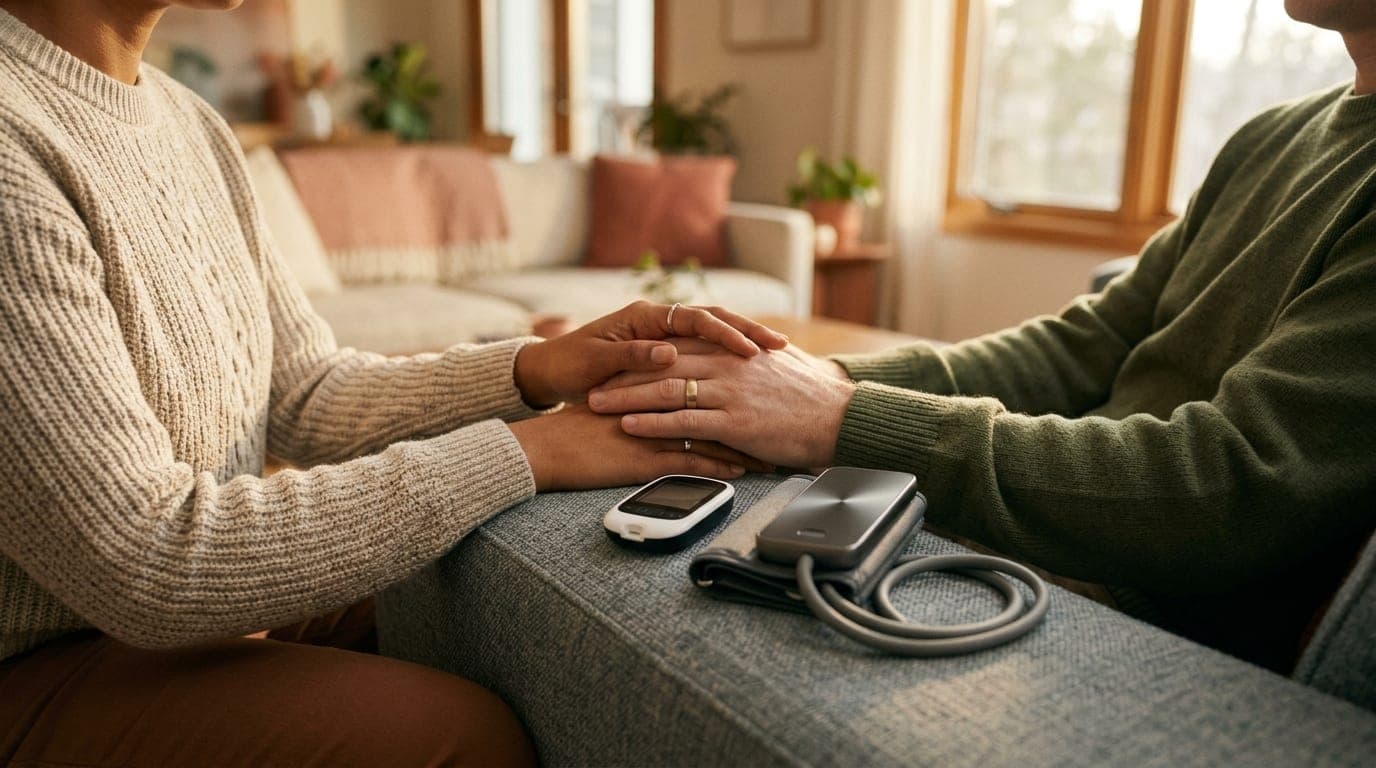
Understanding the Connection Between Sexual Health and Heart Disease
✔
Reviewed for accuracy | Not a substitute for medical advice
Sponsored Content
Sponsored Content
Frequently Asked Questions
While the fear is common, the actual risk is very low. Less than 1% of heart attacks are triggered by sexual activity. If you can walk briskly or climb two flights of stairs without symptoms, you are generally at low risk. However, always seek medical clearance after a cardiac event before resuming sexual activity.
In many cases, yes, but it depends entirely on your other medications. You must never take PDE5 inhibitors like Viagra if you are using nitrates for chest pain, as the combination causes a dangerous drop in blood pressure. Always consult your cardiologist to ensure your heart is stable enough for the medication.
High blood pressure damages the lining of the blood vessels (endothelium), leading to atherosclerosis. This reduces blood flow to the reproductive organs, causing erectile dysfunction in men and decreased arousal or lubrication in women. Managing blood pressure is a key component of maintaining sexual-health-and-heart-disease balance.
Yes. For those with limited cardiac reserve, positions that require less isometric muscle tension are better. This typically means the person with heart disease takes a more passive role, such as lying on their back or using a side-lying position. This keeps the heart rate and blood pressure from spiking too high during the act.
Some older beta-blockers and diuretics are known to cause sexual side effects, including reduced desire or erectile issues. However, you should never stop taking your medication without consulting your doctor. Many modern alternatives, such as ACE inhibitors or newer beta-blockers, have fewer side effects and may even improve vascular health.
Disclaimer: This content is for informational purposes only and is not a substitute for professional medical advice, diagnosis, or treatment.
The relationship between sexual health and heart disease is one of the most critical, yet often overlooked, aspects of systemic wellness. As of August 2026, clinical consensus highlights that the vascular system does not operate in isolation; the same blood vessels that supply the heart also facilitate sexual arousal and response. When we discuss sexual-health-and-heart-disease, we are essentially discussing the health of the entire circulatory system. For many, a change in sexual function is the first clinical indicator that the heart may be under strain. This guide provides an authoritative look at how these two areas of health overlap, what the risks are, and how to navigate a fulfilling sex life while managing cardiovascular concerns.
Understanding this connection requires a shift in perspective. Instead of viewing sexual dysfunction as a localized issue or an inevitable part of aging, it should be viewed as a vital sign. Modern medicine treats the endothelium—the thin lining of the blood vessels—as a unified organ. When the endothelium is damaged by high blood pressure, high cholesterol, or diabetes, it cannot produce the nitric oxide necessary for vasodilation. This lack of dilation affects the smallest arteries first, which are often found in the reproductive system, before progressing to the larger coronary arteries. Consequently, the intersection of sexual-health-and-heart-disease is a roadmap for preventive care.
Sponsored Content
Key Facts
Sexual-health-and-heart-disease are linked through the "artery size hypothesis," where smaller vessels in the penis or clitoris show signs of narrowing before larger coronary arteries. This means sexual dysfunction often precedes heart attacks by several years. Maintaining vascular health through exercise and diet is essential for preserving both libido and cardiac longevity.
Cardiovascular diseases (CVDs) remain the leading cause of death globally, claiming an estimated 17.9 million lives each year (WHO, 2023).
Approximately 5% of men aged 40 have complete erectile dysfunction, a number that increases to 15% by age 70 (CDC, 2024), frequently correlating with undiagnosed hypertension.
Research indicates that men with erectile dysfunction have a 59% higher risk of coronary heart disease compared to those without the condition (AHA, 2022).
The metabolic cost of sexual activity is relatively low, comparable to climbing two flights of stairs or a brisk walk, making it safe for most heart patients.
The Biological Link Between Sexual-Health-and-Heart-Disease
The primary connection involving sexual-health-and-heart-disease is the vascular system's ability to manage blood flow through the endothelium. Because reproductive arteries are significantly smaller than coronary arteries, they are the first to show symptoms of atherosclerosis. This early warning system allows for intervention before a major cardiac event occurs.
To understand why sexual-health-and-heart-disease are so closely tied, one must look at the diameter of the arteries involved. The penile arteries are typically 1 to 2 millimeters in diameter, whereas the proximal left anterior descending coronary artery is 3 to 4 millimeters. When plaque begins to build up throughout the body—a process known as atherosclerosis—it will naturally obstruct the smaller tubes first. This is why a man might notice difficulty achieving or maintaining an erection years before he experiences chest pain or shortness of breath. For women, the connection is similar but often more subtle, manifesting as decreased vaginal lubrication or reduced clitoral sensitivity due to diminished pelvic blood flow.
Furthermore, the psychological toll of heart disease can create a "vicious cycle" impacting sexual-health-and-heart-disease. Patients who have suffered a heart attack often develop "coital anxiety," the fear that sexual activity will trigger another event. This anxiety increases sympathetic nervous system activity, which constricts blood vessels and further inhibits sexual response. Breaking this cycle requires both medical clearance and psychological support. Clinical data suggests that for stable patients, the risk of a heart attack during sex is extremely low—less than 1% of all myocardial infarctions are triggered by sexual activity. When patients understand that their "heart-healthy" habits are also "sex-healthy" habits, they are often more motivated to adhere to treatment plans.
Dating in the modern era also introduces new stressors. For those using platforms like Hinge or Bumble, the pressure to perform or the anxiety of disclosing a heart condition can exacerbate vascular tension. It is important to remember that sexual-health-and-heart-disease management includes managing the social and emotional aspects of romance. Honesty with partners about physical limits can reduce the "performance pressure" that often leads to cardiovascular strain. Whether you are seeking a serious relationship on Match.com or a casual connection, prioritizing your vascular health ensures you can participate fully in your romantic life.
Navigating Sexual Activity with Heart Concerns
Managing sexual-health-and-heart-disease involves a gradual return to physical intimacy after a cardiac event, typically guided by the "staircase test." If a patient can climb two flights of stairs without chest pain or heavy breathlessness, they are generally considered fit for sexual activity. Open communication with healthcare providers ensures safety.
Consult Your Cardiologist: Before resuming sexual activity after a heart attack, surgery, or new diagnosis, obtain a formal clearance. Your doctor may perform a stress test to ensure your heart can handle the 3-4 METs (Metabolic Equivalent of Task) required for intercourse.
Monitor Medication Interactions: This is the most critical safety step. If you are taking nitrates (like nitroglycerin) for chest pain, you must never take PDE5 inhibitors (like Viagra or Cialis). The combination can cause a fatal drop in blood pressure.
Choose the Right Environment: Engage in sexual activity when you are well-rested and in a familiar, low-stress setting. Avoid heavy meals or excessive alcohol before sex, as these can divert blood flow away from the heart and reproductive organs, increasing strain.
Prioritize Communication: Talk to your partner about your fears and physical sensations. If you experience chest pain, dizziness, or extreme palpitations during sex, stop immediately and rest. If the symptoms do not subside, seek emergency medical attention.
In the context of sexual-health-and-heart-disease, "pacing" is a virtue. Some patients find that certain positions are less taxing on the heart than others. For example, positions where the patient is on the bottom or using side-lying techniques may require less isometric muscle contraction and heart rate elevation. Using these modifications allows for intimacy without exceeding the heart's current functional capacity. Additionally, for those exploring new relationships on apps like eHarmony, being upfront about the need for a slower pace can build deeper emotional intimacy while protecting physical health.
Beyond the physical act, sexual-health-and-heart-disease management includes addressing the side effects of common cardiac medications. Beta-blockers and diuretics, while life-saving, are notorious for reducing libido or causing erectile difficulties. Instead of stopping the medication—which can be dangerous—patients should work with their doctors to adjust dosages or switch to heart-friendly alternatives like ACE inhibitors or ARBs, which are less likely to interfere with sexual function. Awareness of these side effects prevents the frustration that often leads to non-compliance with essential heart medications.
Comparing Treatment and Management Options
Treatment for issues arising from sexual-health-and-heart-disease ranges from lifestyle modifications to pharmaceutical interventions. While medications provide immediate relief for dysfunction, lifestyle changes address the root cause by improving overall vascular health. A multidisciplinary approach involving cardiology and urology or gynecology often yields the best results for long-term recovery.
Option
Effectiveness
Considerations
Aerobic Exercise
High (Long-term)
Improves endothelial function; must be consistent (150 min/week).
PDE5 Inhibitors (Viagra, Cialis)
High (Immediate)
Strictly contraindicated with nitrates; requires prescription.
Smoking Cessation
Critical
Stopping smoking (CDC, 2024) is the fastest way to improve blood flow.
Mediterranean Diet
Moderate/High
Rich in nitric-oxide-boosting foods like leafy greens and beets.
Vacuum Erection Devices
Moderate
Non-pharmacological; safe for most heart patients regardless of meds.
When weighing these options, patients must consider that pills are a "band-aid" for the vascular symptoms of sexual-health-and-heart-disease, whereas lifestyle changes are the "cure." For instance, a 2024 report by the CDC suggests that even modest weight loss can significantly improve blood pressure and, by extension, sexual stamina. Many patients find that by focusing on heart health, they naturally resolve their sexual health concerns without the need for additional medication. This "whole-body" approach is the cornerstone of PillowTalk Daily’s philosophy: clinical health leads to sexual pleasure.
Furthermore, for those using male performance supplements or "stamina" boosters found online, caution is paramount. Many unregulated supplements contain undeclared pharmaceutical ingredients that can interact dangerously with heart medications. Always vet your supplements through a medical professional. In the world of sexual-health-and-heart-disease, safety must always precede performance. Brands like Bathmate or other physical aids can be useful, but they should be used as part of a comprehensive plan that includes cardiovascular monitoring.
When to See a Doctor
You should consult a healthcare professional regarding sexual-health-and-heart-disease if you notice a persistent change in your ability to achieve arousal, experience chest pain during intimacy, or find that your heart rate takes an unusually long time to return to baseline after physical exertion. These are vital clinical indicators.
As of August 2026, the medical community urges patients not to wait for a "major sign" to seek help. If you are a man experiencing new-onset erectile dysfunction, or a woman experiencing a sudden, unexplained loss of sexual response, these may be the only symptoms you get before a heart attack or stroke. A doctor can perform a lipid panel, check your blood pressure, and perhaps order a calcium score or stress test. These screenings are non-invasive and can save your life. Remember, there is no shame in discussing sexual health with your doctor; they view these functions as indicators of your internal plumbing.
If you are currently taking medications for heart disease, such as statins or blood thinners, and you notice a drop in your sexual desire or function, this is also a reason for a visit. Your doctor can often "fine-tune" your regimen. For example, certain statins have actually been shown to improve erectile function in some studies by lowering cholesterol and improving blood vessel health. Conversely, if your blood pressure medication is causing issues, a simple switch to a different class of drugs might solve the problem. Proactive communication is the most effective tool in managing sexual-health-and-heart-disease.
Where to Get Tested or Get Help
For those concerned about sexual-health-and-heart-disease, your primary care physician is the first point of contact. They can provide referrals to cardiologists for heart screenings and urologists or sexual health specialists for dysfunction. Organizations like Planned Parenthood also provide essential screenings for vascular health and sexual wellness.
In addition to traditional clinics, many hospitals now have "Cardio-Sexual Health" programs specifically designed to help heart patients regain their confidence and function. These programs combine the expertise of cardiologists, therapists, and sexual health educators. If you are looking for resources online, ensure they are from reputable sources like the American Heart Association (AHA) or the World Health Organization (WHO). For younger adults navigating dating and heart health, university health centers often provide discreet counseling and testing services that can address both the physical and emotional aspects of these conditions.
If you need immediate help or are looking for testing for STIs—which can also impact vascular health through inflammation—Planned Parenthood (2024) remains a premier resource for inclusive, authoritative care. They offer cardiovascular screenings such as blood pressure checks and cholesterol testing alongside traditional sexual health services. Remember, managing sexual-health-and-heart-disease is an ongoing process. By staying informed and proactive, you can ensure that your heart remains strong enough to support a vibrant and healthy sex life for years to come.
Sources
World Health Organization (WHO). (2023). Cardiovascular diseases (CVDs) Fact Sheet.
Centers for Disease Control and Prevention (CDC). (2024). Heart Disease Facts and Statistics.
Planned Parenthood. (2024). Sexual Health and Physical Wellness Resources.
American Heart Association (AHA). (2022). Sexual Activity and Cardiovascular Disease: A Scientific Statement.