The Green-Eyed Algorithm: Why We’re More Jealous Than Ever (and How to Live With It)
PillowTalk Daily Editorial7 min read
Sponsored Content
Sponsored Content
Frequently Asked Questions
Not necessarily. While it can stem from personal insecurity, it is often a rational response to 'relational ambiguity' or a partner's inconsistent behavior. It’s an alarm system for your boundaries, not a character flaw.
Shift from accusation to vulnerability. Instead of saying 'Why are you liking their photos?', try 'I’ve been feeling a bit disconnected lately, and seeing your interactions online makes that feeling more intense. Can we talk about our digital boundaries?'
It refers to the modern talking stage where two people are consistently engaging but haven't committed to exclusivity. It is a high-jealousy zone because expectations are often unstated and both parties may still be 'adrift' on dating apps.
Transparency is a tool, not a cure. While sharing passwords can build trust for some, it often leads to 'policing' behavior. Focus on why you feel the need to check the phone rather than the access itself.
Anxiety is usually repetitive, vague, and focused on 'what ifs.' Intuition is often calm, specific, and tied to observable patterns of behavior. If the feeling persists even when things are 'good,' it may be anxiety; if it only triggers during specific actions, it’s likely intuition.
As of May 2026, we have more tools than ever to "know" what our partners are doing, yet we have never been more uncertain about where we stand. Jealousy, that cold, sharp stone in the pit of the stomach, hasn't been evolved out of the human psyche by better interfaces or more transparent dating apps. If anything, the hyper-visibility of modern life has turned a primal protective instinct into a 24/7 surveillance state of the heart. We see the "likes," we notice the subtle shifts in response times, and we watch the "Set Adrift" status on dating profiles as people linger in the talking stage longer than they ever did a decade ago. We are drowning in data but starving for security.
The truth is, jealousy isn't a character flaw, and it’s certainly not "toxic" by default—it’s an alarm system. But in the current dating landscape, our alarms are going off because the wind is blowing, not because the house is on fire. To navigate this, we have to stop treating jealousy like a shameful secret and start looking at it as a map of our own boundaries and the precariousness of modern intimacy. We don't need more "open communication" buzzwords; we need a radical reckoning with how we value attention in an age where it is the only currency that matters.
Sponsored Content
As of April 2026, we have more tools than ever to "know" what our partners are doing, yet we have never been more uncertain about where we stand. Jealousy, that cold, sharp stone in the pit of the stomach, hasn't been evolved out of the human psyche by better interfaces or more transparent dating apps. If anything, the hyper-visibility of modern life has turned a primal protective instinct into a 24/7 surveillance state of the heart. We see the "likes," we notice the subtle shifts in response times, and we watch the "Set Adrift" status on dating profiles as people linger in the talking stage longer than they ever did a decade ago. We are drowning in data but starving for security.
The truth is, jealousy isn't a character flaw, and it’s certainly not "toxic" by default—it’s an alarm system. But in the current dating landscape, our alarms are going off because the wind is blowing, not because the house is on fire. To navigate this, we have to stop treating jealousy like a shameful secret and start looking at it as a map of our own boundaries and the precariousness of modern intimacy. We don't need more "open communication" buzzwords; we need a radical reckoning with how we value attention in an age where it is the only currency that matters.
The Surveillance Trap: Information Without Context
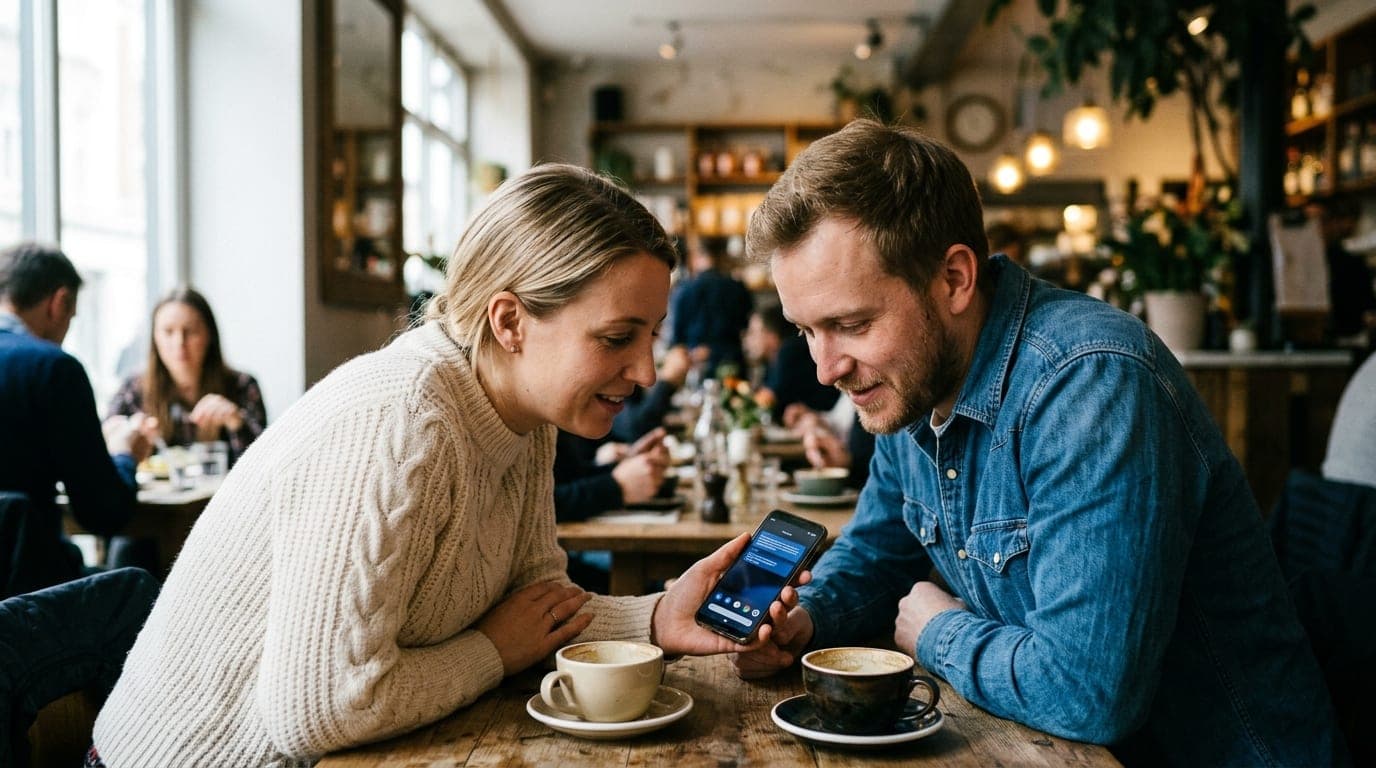
In 2026, the primary fuel for jealousy isn't a physical act of betrayal; it is the ambiguity of digital breadcrumbs. We live in a world of "perceived threats." When you see your partner—or the person you’ve been seeing for three weeks—comment on an old flame's post, your brain doesn't just see text. It sees a narrative. It sees a history you aren't part of and a future you might be excluded from. This is the surveillance trap: the belief that having access to someone’s digital output equates to having access to their internal world.
The architecture of modern dating platforms, particularly during the "talking stage," is designed to keep us in a state of high-alert engagement. When you’re in that "Set Adrift" phase—where you’ve moved past the initial match but haven't quite anchored the relationship—the lack of defined territory makes every external interaction feel like a threat to the foundation you’re trying to build. You are effectively "adrift" in a sea of potential replacements, and jealousy becomes the anchor you try to throw out to stop yourself from floating away. But an anchor thrown in the middle of an ocean doesn't hold anything; it just drags you down.
We must acknowledge that our brains were not built to witness the social interactions of our loved ones in real-time without the benefit of tone, body language, or intent. When we see a "like," we don't see the five seconds of mindless scrolling that preceded it; we see a deliberate choice to appreciate someone else. This creates a "shadow relationship"—a version of your partner that exists only in your phone, behaving in ways that your imagination fills with the worst possible motives. The framework for surviving this isn't to stop looking (though that helps), but to recognize that digital data is almost always "low-resolution." It tells you what happened, but it never tells you why. Relying on it to gauge the health of your relationship is like trying to diagnose a heart condition by looking at someone’s shoes.
The Scarcity of Attention in an Age of Abundance
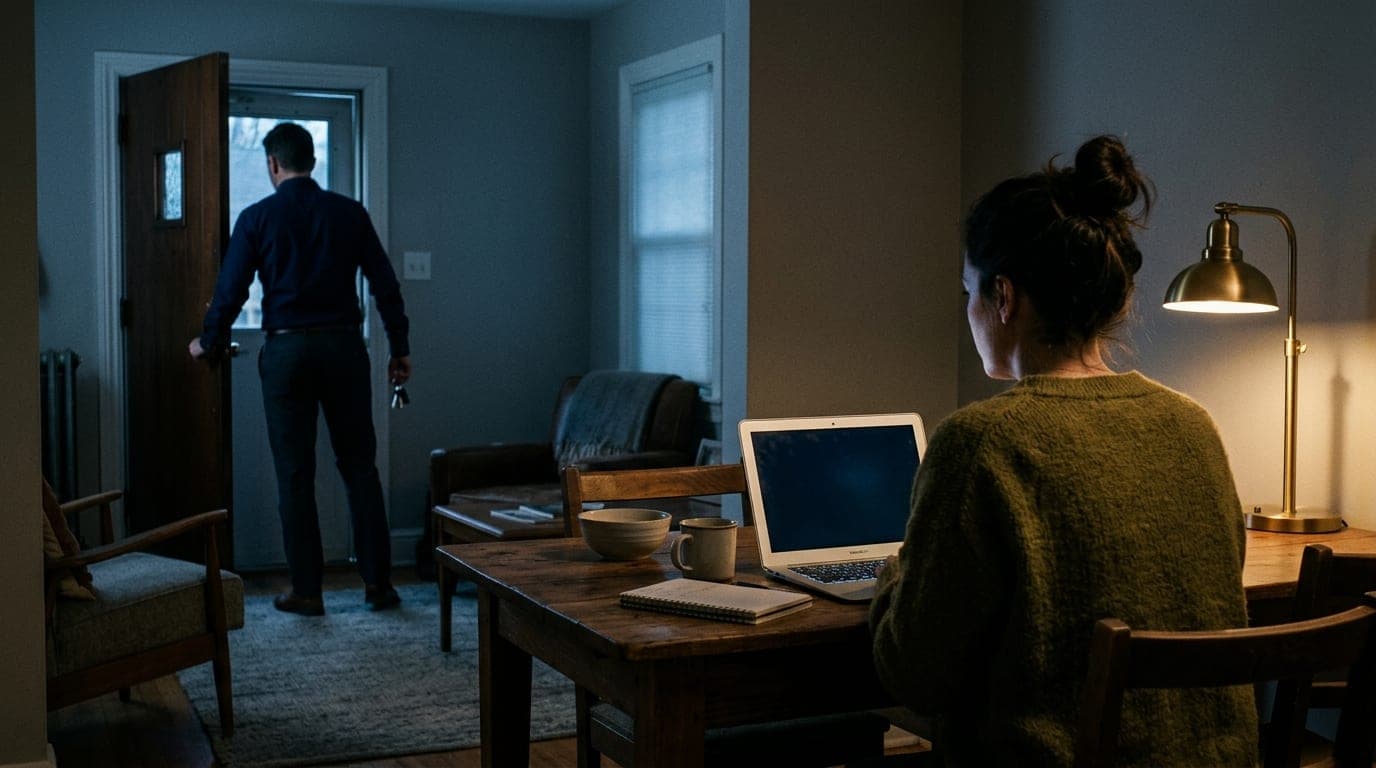
We are told that we live in an era of "infinite choice," but for the individual looking for a genuine connection, it feels like an era of infinite noise. Jealousy in 2026 is often a reaction to the commodification of attention. When your partner is on their phone while lying in bed with you, the jealousy isn't necessarily about who they are talking to; it’s about the fact that they are *elsewhere*. In a world where everyone is a click away, the most valuable thing someone can give you is their presence. When that presence is fragmented, jealousy steps in to fill the gaps.
There is a specific kind of modern envy that stems from the "performance of availability." We see our partners being "available" to the world—posting stories, replying to comments, maintaining a digital presence that screams "I am here and I am interesting"—while we receive the "low-battery" version of them at the end of the day. This creates a secondary layer of jealousy: not that they are cheating, but that the world is getting a better version of them than we are.
This insight forces us to look at jealousy as a symptom of a "connection deficit." If you feel secure, a stray comment or a night out with friends doesn't register as a threat. When the connection is thin, however, every breeze feels like a hurricane. We have moved away from the "village" model of dating toward an "optimization" model. We are constantly checking to see if we are being optimized out of someone’s life. To combat this, we have to stop focusing on the "other people" and start focusing on the quality of the "us." Jealousy thrives in the silence between two people. It dies in the face of consistent, undistracted engagement. If you are worried about who else they are talking to, it is usually because the conversation they are having with *you* has become stagnant.
The Practical Architecture of Trust
So, how do we actually handle this without descending into "crazy person" territory or, conversely, becoming a doormat? It starts with a move away from "policing" and toward "boundary-setting." Policing is about controlling the other person’s behavior (e.g., "You can't talk to her"). Boundary-setting is about defining what you need to feel safe (e.g., "I feel disconnected when we’re together but you’re engaging with other people on your phone").
First, we have to kill the "Cool Girl" or "Chill Guy" myth. The idea that you should never feel jealous is a lie marketed by people who are too afraid of intimacy to care if they lose it. Jealousy is a natural response to the possibility of losing something you value. Instead of suppressing it, name it. "I noticed I felt a bit of a sting when I saw that post, and I think it’s because I’ve been feeling a little distant from you lately." This isn't an accusation; it’s a weather report. It gives your partner the information they need to help you without putting them on the defensive.
Second, establish a "Digital Sunset" or "Set Adrift" protocol. When you are in that ambiguous stage, or even in a committed one, agree on what privacy looks like versus what secrecy looks like. Privacy is having a password on your phone because you deserve a private inner world. Secrecy is changing your behavior to hide what’s on that phone. If you’re in the talking stage and someone is still actively "Adrift" on the apps, you have to decide if that’s a dealbreaker for you or just the reality of 2026. Don't play the "who cares less" game. If you want exclusivity, ask for it. If they can't give it, the jealousy you're feeling is your intuition telling you that your needs aren't being met.
Third, audit your own "Digital Hygiene." If you find yourself scrolling through your partner's "following" list at 2 AM, you aren't looking for the truth; you’re looking for a reason to hurt. The algorithm will eventually give you one—a misinterpreted "like," a suggestive photo from three years ago—and you will spiral. Trust is a practice, not a destination. You have to actively choose to believe the person in front of you over the data on the screen. If you can't do that, the problem isn't the "other person"—it's the foundation of the relationship itself.
When to Walk Away: Distinguishing Anxiety from Intuition
There is a dangerous trend in modern "wellness" culture that suggests all jealousy is internal—that if you feel insecure, it's your own trauma to heal. This is gaslighting by another name. Sometimes, you are jealous because your partner is *actually being untrustworthy*. The key is distinguishing between "Anxious Jealousy" (I'm afraid they'll leave) and "Reactive Jealousy" (They are doing things that would make any reasonable person feel insecure).
You should consider walking away when the "Set Adrift" phase becomes a permanent state of being. If you have expressed your need for security and your partner responds by calling you "crazy," "insecure," or "controlling" without addressing the behavior that triggered the feeling, that is a massive red flag. A partner who cares about you will care about your peace of mind. They won't necessarily stop every behavior you dislike, but they will engage in a conversation about how to make you feel anchored.
Watch out for the "Perpetual Seeker"—the person who needs constant external validation from strangers or exes to maintain their own self-esteem. You cannot "fix" a partner's need for outside attention by being "better" or "less jealous." Their bucket has a hole in it, and no matter how much reassurance you pour in, it will never stay full. If your jealousy has become a permanent feature of the relationship—if you have become a private investigator instead of a partner—you have already lost the relationship. You are now just managing a crisis.
Finally, walk away if the relationship requires you to shrink yourself to stay in it. If you have to pretend you don't have feelings, or if you have to "mute" your own intuition to avoid a fight, you are sacrificing your sanity for the illusion of companionship. Jealousy is often the last signal of self-respect leaving the building. Listen to it. It’s not telling you that they are "the one" and you’re losing them; it’s telling you that you deserve to be with someone who doesn't make you feel like you’re constantly auditioning for a role you already landed.
The most painful thing about jealousy isn't the fear that they’ll find someone better; it’s the quiet, crushing realization that they might be looking for someone else at all while they’re standing right in front of you.