The Inventory of Distrust: Relearning How to See People in the Age of the Red Flag
PillowTalk Daily Editorial8 min read
Sponsored Content
Sponsored Content
Frequently Asked Questions
The 'Performance of Health.' When someone uses therapy-speak to mask a lack of genuine emotional depth or to avoid accountability, it's a sign they're more interested in looking healed than being honest.
Distinguish between Incompatibilities (lifestyle/values) and Hard Stops (disrespect/control). If the issue is a lack of character or safety, it's a flag. If it's a personality quirk, it might just be friction.
It's the sensation of a connection that is technically perfect on paper but lacks emotional grounding or real-world consistency, leaving you feeling untethered despite the constant communication.
You can't fix a person, but 'Growth Areas' can be managed if the person shows consistent, self-motivated effort. If you have to beg them to change, it's a Hard Stop, not a Growth Area.
Intuition is a calm, physical 'knowing' in the present, while fear is a loud, anxious 'what-if' about the future. If you feel you have to shrink yourself to make the relationship work, that's your intuition speaking.
As of May 2026, the vocabulary of modern dating has become a clinical flowchart. We no longer just "go out" with people; we audit them. We enter the first date not with a sense of curiosity, but with a mental clipboard, ready to check off micro-behaviors that might signal a personality disorder or a lack of emotional intelligence. We’ve been conditioned by a decade of "therapy-speak" and algorithmic warnings to view every potential partner as a collection of liabilities. It is an exhausting way to live, and an even more exhausting way to love. We are so focused on not being "gaslit" or "love-bombed" that we’ve forgotten that the most dangerous thing you can do in a relationship isn't dating a flawed human—it’s refusing to see the human behind the flaw.
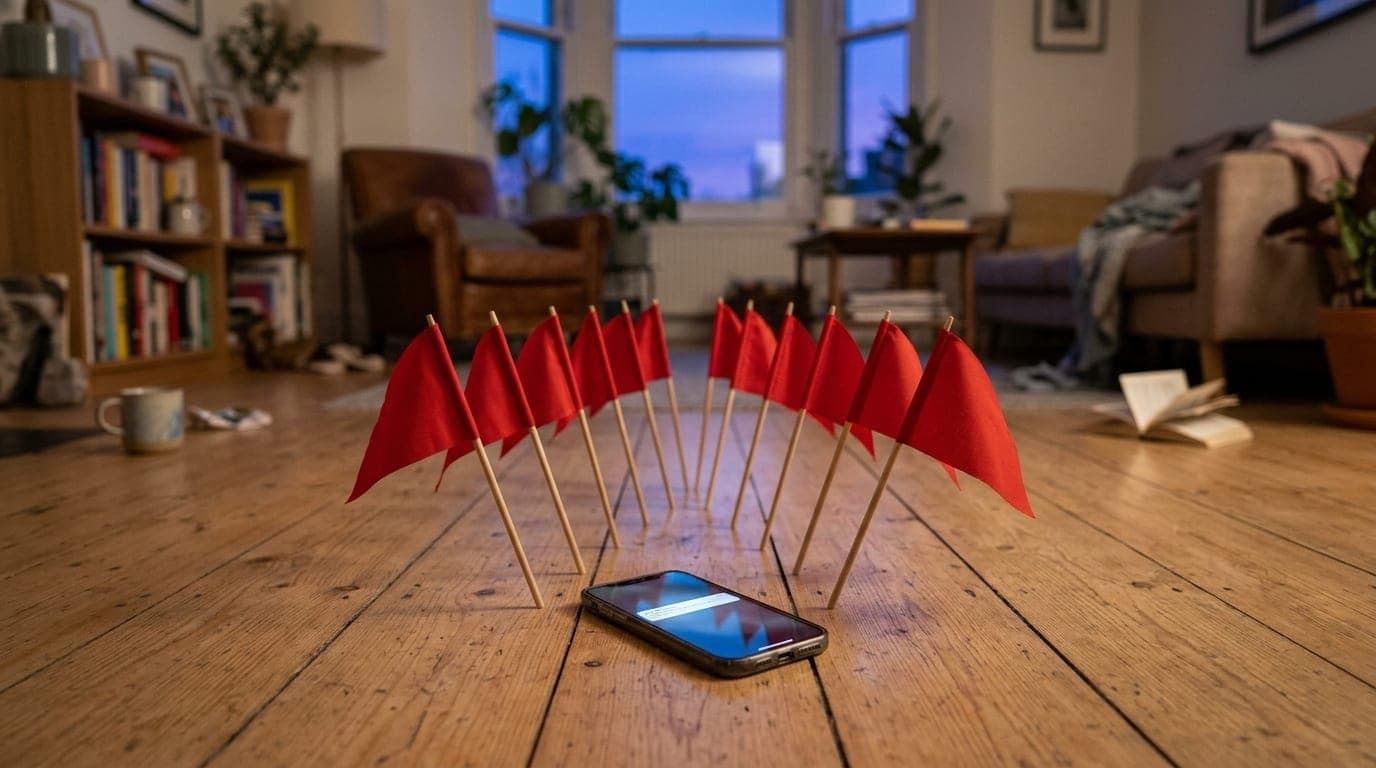
The reality is that red flags have been commodified. They’ve become a form of social currency, a way to signal our own supposed health by pointing out the pathology of others. But real talk? Most of what we call "red flags" are actually just amber lights of human friction. We’ve lost the ability to distinguish between a person who is dangerous and a person who is simply clumsy with their heart. If we want to find something real in this landscape of hyper-surveillance, we have to stop looking for reasons to leave and start looking for reasons to stay—while maintaining enough self-respect to know when the exit is the only logical choice. This isn't about lowering your standards; it’s about recalibrating your vision.
Sponsored Content
As of April 2026, the vocabulary of modern dating has become a clinical flowchart. We no longer just "go out" with people; we audit them. We enter the first date not with a sense of curiosity, but with a mental clipboard, ready to check off micro-behaviors that might signal a personality disorder or a lack of emotional intelligence. We’ve been conditioned by a decade of "therapy-speak" and algorithmic warnings to view every potential partner as a collection of liabilities. It is an exhausting way to live, and an even more exhausting way to love. We are so focused on not being "gaslit" or "love-bombed" that we’ve forgotten that the most dangerous thing you can do in a relationship isn't dating a flawed human—it’s refusing to see the human behind the flaw.
The reality is that red flags have been commodified. They’ve become a form of social currency, a way to signal our own supposed health by pointing out the pathology of others. But real talk? Most of what we call "red flags" are actually just amber lights of human friction. We’ve lost the ability to distinguish between a person who is dangerous and a person who is simply clumsy with their heart. If we want to find something real in this landscape of hyper-surveillance, we have to stop looking for reasons to leave and start looking for reasons to stay—while maintaining enough self-respect to know when the exit is the only logical choice. This isn't about lowering your standards; it’s about recalibrating your vision.
The Pathology of the "Perfect" Profile
In our current era, the most significant red flag is often the absence of any flags at all. As of May 2026, we’ve reached a point where everyone knows the "right" things to say. We have been socialized by TikTok psychologists and Instagram infographics to present a version of ourselves that is perfectly "healed." This is the Performance of the Green Flag. You meet someone who talks about their "inner child," who respects your "boundaries" before you’ve even set them, and who uses all the right nomenclature of the modern romantic. But often, this is just a more sophisticated mask. When someone’s personality feels like a curated set of healthy behaviors, it usually means they are terrified of their own messiness.
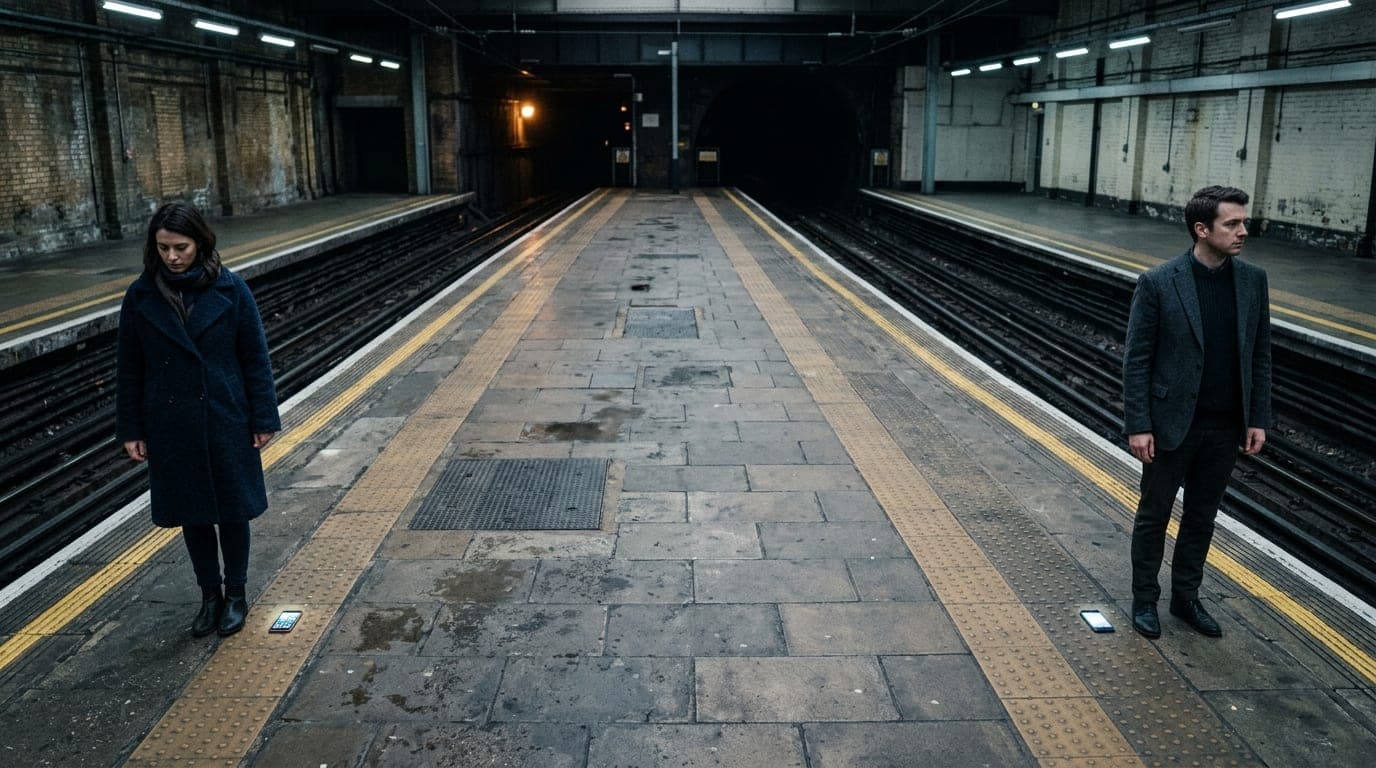
The danger here isn't necessarily malice; it’s the lack of authenticity. When we prioritize the *appearance* of health over the *process* of connection, we create a vacuum. You might find yourself in the "talking stage," feeling what many now call being **Set Adrift**—that specific, floating sensation where the conversation is technically perfect but emotionally weightless. You are exchanging resumes of personal growth rather than sharing the grit of your actual lives. If someone is too polished, if they never admit to a mistake that wasn't "a learning opportunity," they aren't showing you who they are. They are showing you a product. True intimacy requires the risk of being seen as "problematic" in small, forgivable ways.
We have to look for the "seams" in the persona. Does their behavior match their vocabulary? It’s easy to say you value communication; it’s much harder to actually stay in the room when a conversation gets uncomfortable. The red flag isn't that they get defensive—it’s if they refuse to acknowledge the defensiveness once the dust has settled. We are looking for people, not archetypes. If you find yourself dating a brochure for mental health, proceed with caution. The most "evolved" people are usually the ones who are the most honest about how much they still have to learn.
The Algorithm of Avoidance
The second insight we need to grapple with is how we use the concept of red flags as a shield against vulnerability. By labeling every uncomfortable trait as a "flag," we give ourselves a moral excuse to bail the moment things get difficult. This is the Algorithm of Avoidance. We’ve turned dating into a zero-tolerance policy. He didn't text back for six hours? Red flag: breadcrumbing. She mentioned her ex twice on the first date? Red flag: trauma dumping. They have a complicated relationship with their mother? Red flag: enmeshment.
While these things can certainly be indicators of deeper issues, they are also just... life. We are all carrying the luggage of our previous decades. When we use red flags as a shorthand to dismiss people, we are often just protecting ourselves from the messy, unpredictable labor of building a relationship. We have become consumers of connection, and like any consumer, we want a defect-free product. But people are not products. They are systems. And systems have glitches.
The real red flag is a pattern, not a data point. A single instance of poor timing or an awkward comment is a moment; a consistent refusal to adjust or listen is a pattern. We need to stop being "red-flag detectives" and start being "pattern recognizers." This requires patience, which is the one thing the current dating climate refuses to provide. We want to know if someone is "safe" by the second drink, but safety is earned through a series of small, consistent actions over time. If you’re constantly looking for the exit, you’ll never stay long enough to see if the person is actually worth the work.
The Manual: How to Vet Without Losing Your Soul
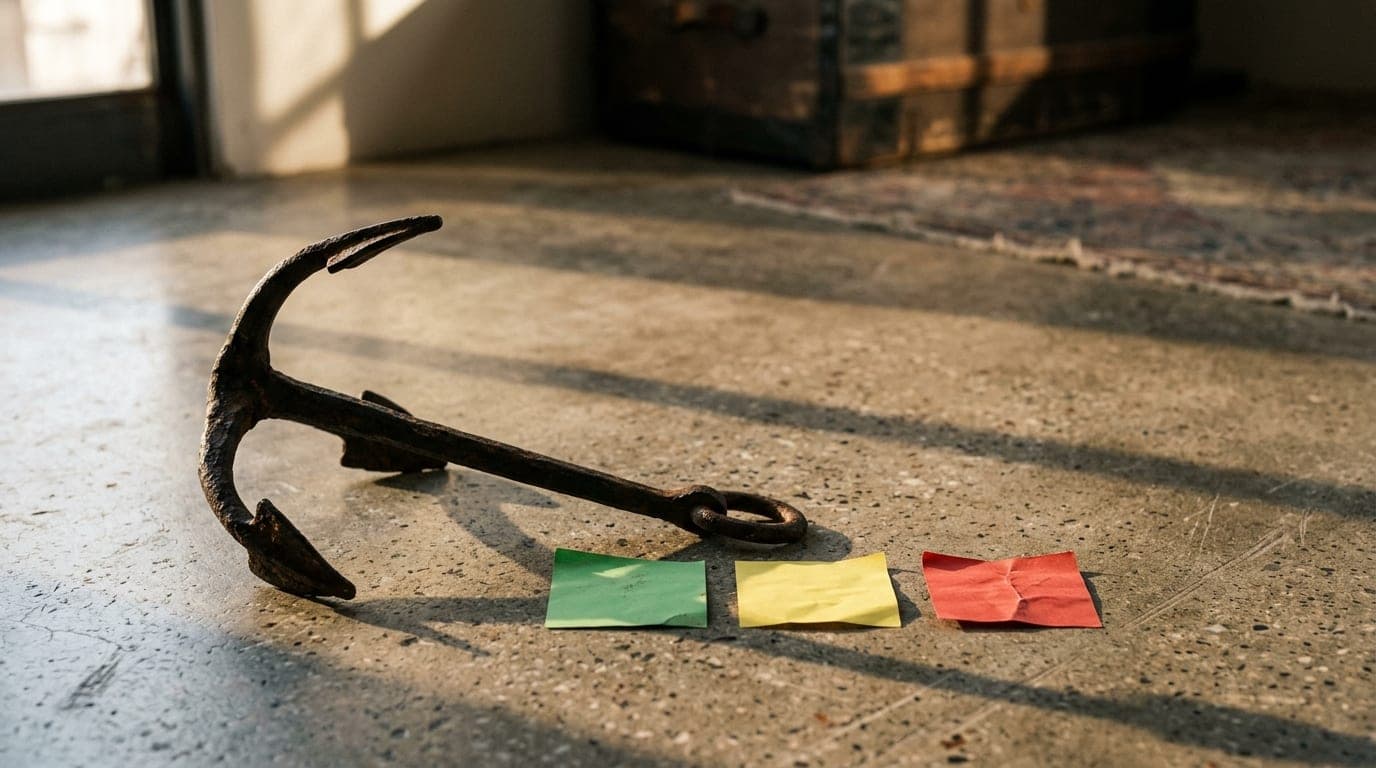
So, how do we navigate this without becoming either a doormat or a cynic? The first step is to categorize what you’re seeing. Stop using the term "red flag" for everything. Instead, use three distinct categories: Incompatibilities, Growth Areas, and Hard Stops.
Incompatibilities are things that aren't "wrong," they’re just not for you. This includes different lifestyle paces, opposing views on children, or a fundamental difference in how you spend money. These aren't character flaws; they’re logistical misalignments. If you try to frame these as red flags, you’ll end up feeling resentful toward a perfectly fine person who just happens to want a different life than you do. Acknowledge the mismatch and move on with grace.
Growth Areas are the "amber lights." These are the flaws that we all have. Maybe they struggle to express their feelings in the heat of the moment. Maybe they’re a bit too focused on work. Maybe they have some lingering insecurities from a past betrayal. These are things that can be worked on *if* the person is self-aware and willing to put in the effort. The "green flag" here isn't the absence of the issue, but the presence of the will to address it. This is where you test the "Set Adrift" theory: when you bring up a concern during the talking stage, do they anchor down and listen, or do they drift further away into defensiveness?
Hard Stops are the actual red flags. These are non-negotiable behaviors that indicate a lack of basic respect, safety, or integrity. This isn't about "vibes"; it’s about actions. Does it feel like they are trying to isolate you? Do they lie about small, inconsequential things just to maintain control of the narrative? Do they treat service staff like NPCs in their own personal video game? These are the indicators of character, and character is the only thing that doesn't change without a massive, internal upheaval. You cannot "love" someone into having character.
Practical advice: Watch how they handle the word "No." It is the ultimate litmus test. It doesn't have to be a big "No." It can be "No, I don't want to go to that restaurant" or "No, I’m not ready to share that yet." A person who respects your autonomy will accept a "No" without making you pay for it later with guilt, anger, or the silent treatment. A person who sees you as an extension of their own needs will find a way to punish you for it. That is the only flag you need to worry about in the first month.
When to Walk Away: The Difference Between Fear and Intuition
The hardest part of modern dating is distinguishing between the fear of being hurt and the intuition that something is wrong. Fear is loud, frantic, and usually focuses on the future ("What if they leave me?" "What if they’re cheating?"). Intuition is quiet, heavy, and focuses on the present ("I don't feel like myself when I’m with them"). As of May 2026, we are over-stimulated by external advice, making it harder to hear that internal voice.
You should walk away when the "cost of admission" for the relationship is your own peace of mind. Every relationship has a cost—time, effort, the occasional compromise—but it should never cost you your sense of reality. If you find yourself constantly checking their social media to see if their "stories" align with what they told you, you’ve already lost. If you are spending more time analyzing their texts with your friends than you are actually enjoying their company, the relationship is already a ghost. We often stay in these situations because we want to be "proven wrong" about our suspicions, but in doing so, we ignore the most important fact: the suspicion itself is a symptom of a lack of safety.
Watch for the "Slow Fade of Self." This is the most insidious red flag. It’s not something *they* do, but something that happens to *you*. You stop seeing your friends. You stop pursuing your hobbies because you’re "on call" for their erratic schedule. You start editing your thoughts before you speak to avoid a "misunderstanding." This is the subtle architecture of an unhealthy dynamic. It doesn't look like a movie villain; it looks like a gradual shrinking of your world. If you look around and realize your life has become smaller since they entered it, it’s time to go. It doesn't matter how "good on paper" they are or how much "potential" they have. Potential is a fantasy; behavior is the reality.
Finally, understand that walking away isn't a failure. In a culture that prizes "winning" the dating game, we often view a breakup as a wasted investment. But the only wasted investment is staying one day longer in a situation that requires you to abandon yourself. You don't need a "valid" enough reason to leave beyond the fact that you no longer wish to stay. You are allowed to leave because you’re bored, because you’re unfulfilled, or because the "vibes" actually *are* off. You don't need to build a legal case against someone to justify your exit. Sometimes, the red flag is simply the absence of joy.