The High Cost of the Highlight Reel: Navigating Social Media Curation and Relationship Reality
PillowTalk Daily Editorial9 min read
Sponsored Content
Sponsored Content
Frequently Asked Questions
Not necessarily. 'Pocketing' is a real thing, but many people simply value privacy. The key is how they treat you in front of friends and family in the physical world. If you're integrated into their real life but absent from their Instagram, it's usually a healthy boundary. If you're missing from both, that's a red flag.
Be direct but empathetic. Explain that you feel the pressure of the 'audience' is distracting you from the intimacy of the moment. Frame it as wanting more 'just for us' time. Most partners will understand that you value the relationship's sanctity over its public image once it's explained that way.
Absolutely. Evolutionarily, we are wired for social comparison. However, remember that you are seeing a curated highlight reel. Many 'perfect' couples struggle with the same mundane issues—finances, chores, and libido—as everyone else. Remind yourself that a photo is a frozen second, not a lifestyle.
Soft launching is posting subtle hints of a partner (like two wine glasses) before a full reveal. It can be a fun, low-pressure way to transition into a public relationship. It becomes unhealthy only if it's used to 'test the waters' of an ex's reaction or to keep a partner in a state of 'maybe' for too long.
Use it as a shared scrapbooking tool rather than a broadcast station. Share private folders or use apps designed for couples. When you do post publicly, focus on gratitude or shared humor rather than trying to look 'perfect.' Authenticity is the best defense against the soul-sucking nature of the algorithm.
As of August 2026, the lines between our digital personas and our visceral realities have blurred into a near-indistinguishable haze. We live in an era where AI-enhanced real-time video filters can smooth over a lover’s argument as easily as they smooth over a blemish. It’s a strange time to be in love. We are constantly caught between the urge to document our "best lives" on platforms like Instagram and TikTok and the heavy, often unglamorous work of actually building a life with another human being. At PillowTalk Daily, we’re seeing a massive surge in couples who feel like they’re failing because their Tuesday nights don't look like a Hinge advertisement. The truth is, your relationship isn't a brand, and your partner isn't a content creator—unless they actually are, in which case, God help your Sunday mornings. Let’s talk about the friction between the feed and the feel.
Sponsored Content
The Psychology Behind Digital Performances
Understanding social-media-curation-and-relationship-reality requires acknowledging our innate desire for social validation and the dopamine loops created by engagement metrics. When we post only the best moments, we are not necessarily lying; rather, we are constructing a digital archive that prioritizes aspirational identity over the mundane, often messy, truth of daily partnership.
The "curation trap" isn't just about vanity; it’s about social capital. In the mid-2020s, a "stable" relationship has become a form of status symbol. We’ve moved past the "Facebook Official" era into the "Vibe Curated" era. If you’re on a platform like Match or eHarmony, you’re already presenting a version of yourself that is polished for consumption. But once the relationship starts, the pressure doesn’t always dissipate. Instead, it evolves into a need to prove to the world—and often to ourselves—that the investment was worth it. We see this in the "soft launch" culture, where a hand or a blurry shoulder is posted to tease a new partner's existence. It’s a performance of exclusivity that treats intimacy like a product rollout.
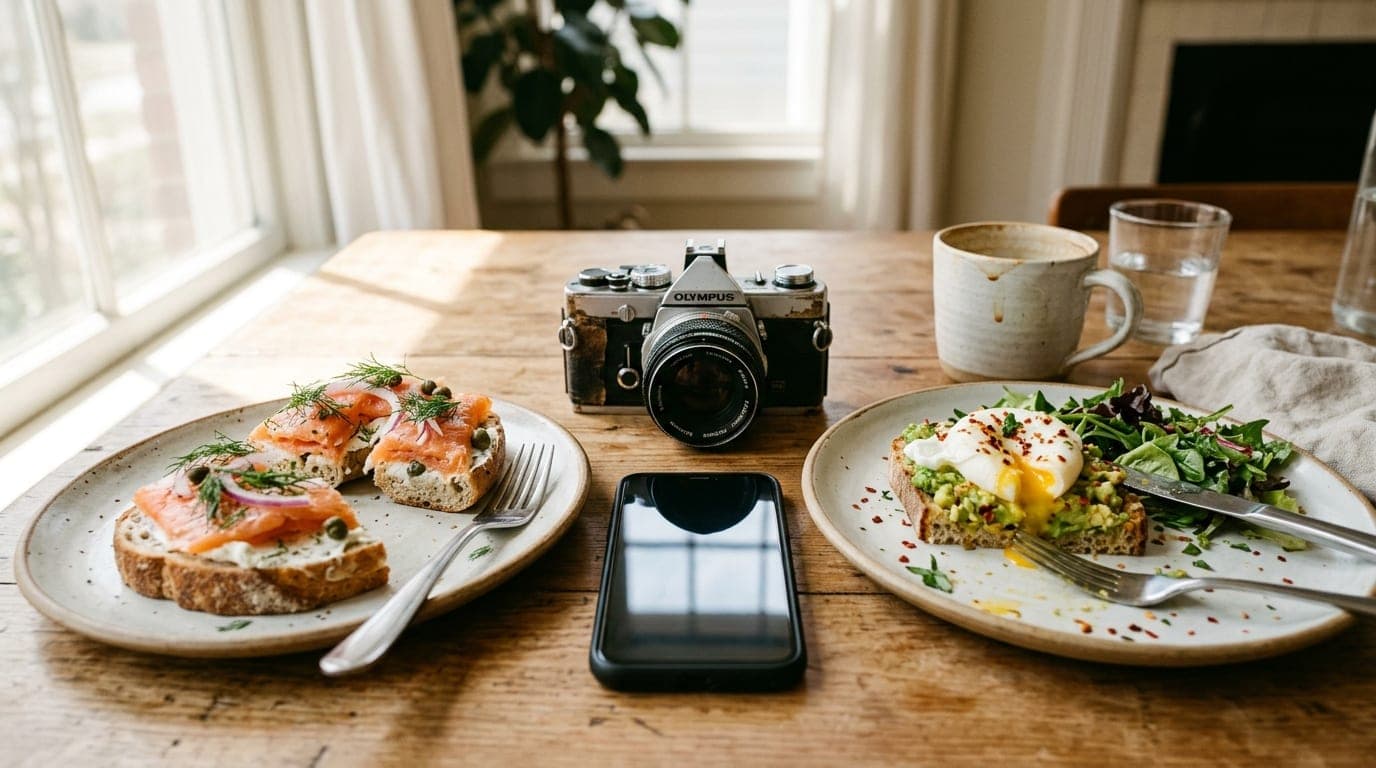
This curation has a psychological cost. When we spend twenty minutes trying to get the lighting right for a dinner photo, we are effectively exiting the shared moment. We are no longer two people eating pasta; we are a director and a subject. This creates a "spectator" effect within the relationship. You start to view your partner not as a person with flaws and needs, but as a prop in your life’s narrative. Statistics back up this growing unease: 52% of young adults report feeling pressure to post "couple content" to prove their relationship is stable (YouGov, 2024). When the "likes" become the metric for relationship health, the actual connection begins to starve from a lack of genuine attention.
Moreover, the comparison trap is lethal. You see a couple on a beach in Bali and suddenly your very comfortable, very loving movie night on the couch feels "less than." This is relationship dysmorphia—a distorted view of your own bond caused by the filtered highlights of others. We forget that the Bali couple might have been fighting until the moment the shutter clicked. We compare our "behind-the-scenes" footage to everyone else’s "best-of" reel, and in that gap, resentment grows. To combat this, we have to recognize that social-media-curation-and-relationship-reality are often in direct opposition; the more time spent curating the image, the less time is spent cultivating the reality.
The Talking Stage and the "Set Adrift" Effect
Navigating social-media-curation-and-relationship-reality during the initial "talking stage" is particularly treacherous because platforms like Hinge and Instagram offer a curated storefront. To bridge this gap, many are turning to tools like Set Adrift to facilitate deeper, more vulnerable conversations that bypass the polished personas we project to the public world before trust is fully established.
The "talking stage" in 2026 is an exercise in digital forensic science. We scroll through years of posts, looking for clues of character, political leanings, and past exes. By the time we actually meet for a drink, we’ve already built a mental avatar of the person that may be 40% reality and 60% projection. This is where the curation backfires. If someone’s profile is too perfect, we’re waiting for the other shoe to drop. If it’s too messy, we don’t give them a chance. We are judging a book by a cover that has been focus-grouped and airbrushed.
This is why intentionality is becoming the new "cool." Instead of the endless, shallow "u up?" texts or the exchange of curated memes, couples are seeking ways to see the "un-curated" self early on. This is where something like Set Adrift comes in. It’s about creating a safe container for the "real." In the talking stage, you’re essentially two brands negotiating a merger. Using a framework that forces you to answer questions about your fears, your childhood, or your non-negotiables—without the ability to "filter" the response—is the only way to cut through the noise. It’s the digital equivalent of seeing someone without makeup at 6:00 AM; it’s where the truth lives.
We also have to talk about "digital infidelity" and the curation of availability. On apps like Bumble, the way we present our "single but looking" status is a form of curation that often lingers even after a couple has decided to be exclusive. If one person is still curating an "approachable" vibe on social media while the other has gone "hard launch," the disconnect creates immediate friction. The talking stage needs a clear transition point where the curation for the public stops and the cultivation of the private begins. Without that pivot, you’re just two people playing a game of chicken with your privacy settings.
How to Reclaim Your Reality from the Algorithm
To mitigate the negative effects of social-media-curation-and-relationship-reality, couples must consciously prioritize the "lived" experience over the "captured" one by setting boundaries on digital sharing. This involves shifting focus from how a relationship looks to outsiders to how it feels to the people inside it, emphasizing private milestones over public pronouncements for true emotional intimacy.
Reclaiming your relationship from the algorithm requires a "digital detox" mindset that isn't about quitting the internet, but about re-centering the partner. If your phone is the first thing you touch in the morning and the last thing you touch at night, your partner is essentially competing with the entire world for your attention. That is a battle they will eventually lose, because the world is designed to be more "scollable" than a sleeping human.
The "First Look" Rule: Agree that certain events—birthdays, anniversaries, or even just a particularly nice sunset—won't be posted until at least 24 hours after they happen. This ensures the "lived" memory is the primary one, and the "posted" memory is just a souvenir.
Audit Your "Follows": If looking at a specific "couple-fluencer" account makes you feel shitty about your own partner or lifestyle, unfollow them immediately. Your feed should not be a source of inadequacy.
Create "Digital Dead Zones": The bedroom and the dining table should be phone-free. This isn't just about etiquette; it’s about creating a space where social-media-curation-and-relationship-reality cannot interfere with physical presence. If you're concerned about issues like stamina or performance, focusing on the person in front of you—perhaps even exploring tools like Bathmate in a private, un-curated context—can do more for your confidence than any "likes" ever could.
Post the "Mundane": Occasionally, if you must post, share the boring stuff. A photo of the messy kitchen after a shared meal is often a more honest tribute to a partnership than a professional photoshoot in a field of lavender. It signals to your partner that you value the work, not just the result.
By implementing these tactics, you begin to deconstruct the idea that your relationship needs an audience to be valid. Intimacy is, by definition, private. When we invite ten thousand strangers into our most romantic moments, we dilute the potency of the connection. Real love is found in the quiet spaces between the posts—the inside jokes that don't make sense as a caption, the support during a job loss that isn't "aesthetic," and the physical closeness that doesn't require a filter to be beautiful.
Distinguishing Performance from Partnership
Evaluating social-media-curation-and-relationship-reality involves a clear-eyed assessment of whether digital activity serves as a bridge or a barrier to genuine connection. While some curation is normal, a significant disconnect between the "happy couple" online and the "silent roommates" at home often indicates that the digital performance has become a substitute for actual emotional work.
It’s important to realize that social media isn't inherently evil; it’s a tool. For some, sharing their partner is a genuine expression of pride and joy. The danger arises when the sharing becomes a *requirement* for the relationship to feel real. We see this often in couples where one partner is highly active and the other is "offline." The offline partner might feel erased, while the active partner might feel unsupported. Finding a middle ground—a "digital consensus"—is a vital part of modern relationship maintenance.
Pattern
Healthy Version
Red Flag Version
Photo Sharing
Posting a photo because you love the memory and want to save it.
Refusing to eat or leave until the "perfect" shot is achieved for the grid.
Public Affection
Occasional sweet comments that reflect how you speak in private.
Using "love bombing" captions to mask a recent, unresolved argument.
Privacy Boundaries
Discussing what is "ours" vs. what is "theirs" before hitting post.
Sharing intimate details or "funny" failures of a partner without consent.
Conflict Management
Keeping the fight offline and resolving it face-to-face.
Sub-tweeting, changing status, or removing photos to "punish" the partner.
A healthy relationship can survive without a single post. A performance cannot. If you find yourself scrolling through your own feed to remind yourself why you love your partner, you are in a performance. If you look at your partner across the room and feel a warmth that a camera could never capture, you are in a partnership. The distinction is subtle but vital. In the world of 2026, where "deepfakes" of reality are common, the most radical thing you can do is be boring, private, and deeply, genuinely present with the person you chose.
When the Feed Becomes a Red Flag
Recognizing the breaking point in social-media-curation-and-relationship-reality occurs when the "performance" of the relationship becomes more important to a partner than the actual well-being of the bond. If your partner prioritizes photo opportunities over presence or uses social media to manipulate your perception of the relationship’s health, it is a sign of deep-seated insecurity and misalignment.
We need to be honest about "performative love." Sometimes, the most curated feeds are the ones hiding the most rot. We’ve all seen the couple that posts an essay about their "soulmate" on Monday and announces a split on Wednesday. The social media curation was a desperate attempt to "fake it 'til you make it." If you feel like you are being coerced into a digital narrative that doesn't match your lived experience, that is a form of gaslighting. You shouldn't have to smile for a selfie when your heart is breaking.
Furthermore, watch out for the partner who uses social media as a weapon. This includes "monitoring" your likes, questioning who you’re following, or using their own posts to incite jealousy. These are not quirks of the digital age; they are red flags of controlling behavior. In a world where we are always connected, a partner who respects your digital autonomy is a partner who respects you. If the curation of your relationship feels like a chore, or worse, a cage, it’s time to step back and ask what you’re actually protecting: the person or the post?
"The most beautiful parts of a relationship are the ones that are too big to fit into a square, too quiet to be picked up by a microphone, and too real to ever need a filter."