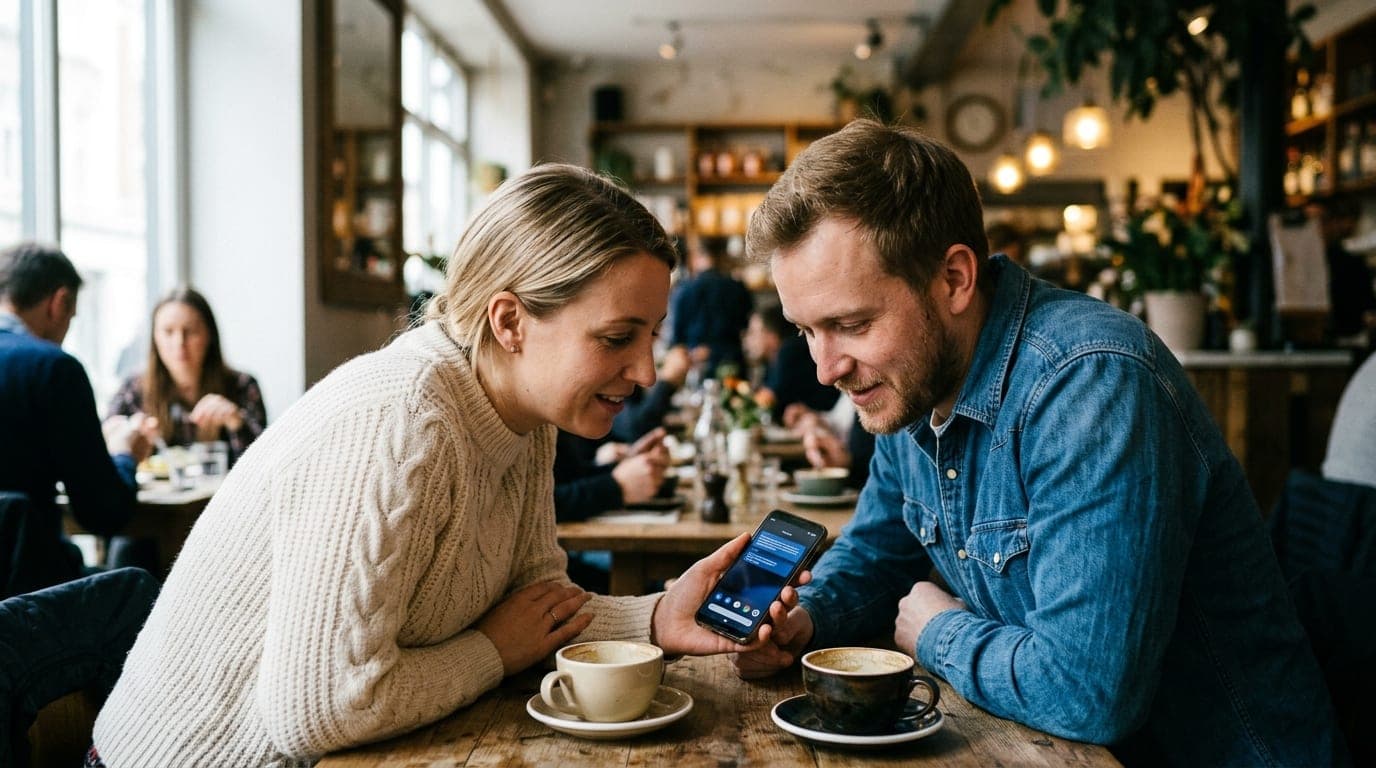
When the Ghost is Your Partner: Navigating the Rise of Digital Widowhood
PillowTalk Daily Editorial8 min read
Sponsored Content
Sponsored Content
Frequently Asked Questions
Early signs include a decrease in spontaneous conversation, feeling 'invisible' when your partner is on their phone, and a lack of eye contact during shared meals. You might also notice that your partner is more responsive to digital notifications than to your verbal 'bids' for attention. If you feel lonely while sitting next to them, the-rise-of-digital-widowhood has likely begun.
Focus on your own feelings rather than their behavior. Instead of saying, 'You're always on your phone,' try saying, 'I miss you, and I feel disconnected when we're together but both on our devices. Can we try having some phone-free time so we can catch up properly?' This frames the issue as a desire for intimacy rather than a demand for control.
Absolutely. Digital integration can be healthy when it’s collaborative. Watching a movie together, playing a mobile game together, or sharing funny content can be a form of bonding. The-rise-of-digital-widowhood occurs when the usage is solitary and exclusionary, creating a wall between partners rather than a bridge. If the activity is shared, it's usually not the problem.
This is a common challenge, but boundaries are still necessary. Discuss 'blackout periods' where work is strictly off-limits, such as during dinner or for the first 30 minutes after waking up. If the job is truly 24/7, you need to have a serious conversation about the long-term sustainability of the relationship and whether the-rise-of-digital-widowhood is an acceptable price for their career.
Yes, but it requires mutual commitment and 'digital hygiene.' Both partners must acknowledge the toll tech use has taken and agree to new rules, like device-free zones or 'phone parking.' Recovery involves re-learning how to be present and rebuilding the habit of making and responding to bids for connection. It takes time, but the emotional reward of real intimacy is worth the effort.
As of July 2026, we have reached a tipping point where our pockets are louder than our partners. We live in an era where the person sitting two feet away from you can feel like they’re on a different continent, separated by the glowing glass of a six-inch screen. This isn’t just about "phubbing" or being rude at dinner anymore. We are seeing a structural shift in how we relate to one another, a phenomenon we’ve come to call the-rise-of-digital-widowhood. It’s that heavy, hollow feeling of being একা (alone) together, watching the person you love disappear into an algorithmic rabbit hole while you’re left holding a lukewarm conversation that never quite catches fire.
At PillowTalk Daily, we don’t believe in demonizing technology. We use it to find love on Hinge, to keep the spark alive on Bumble, and to research how to be better partners. But we have to be real: when the tool becomes the wall, the relationship starts to starve. If you feel like you’re mourning a partner who hasn’t actually left the room, you aren’t crazy, and you aren’t needy. You’re experiencing a very modern form of grief.
Sponsored Content
What exactly is the-rise-of-digital-widowhood?
Digital widowhood refers to the psychological and emotional isolation experienced by individuals whose partners are physically present but mentally unavailable due to excessive screen use. It represents a fundamental shift in modern intimacy where the digital world competes with, and often wins over, the immediate, tactile reality of a shared life.
To understand the-rise-of-digital-widowhood, we have to look at the concept of the "bid for connection." Developed by the Gottman Institute, a bid is any attempt from one partner to another for attention, affirmation, affection, or any other positive connection. It can be as simple as pointing out a bird outside or as complex as asking for advice on a work problem. In a healthy relationship, partners "turn toward" these bids about 86% of the time. However, in the context of digital widowhood, those bids are missed because the partner is scrolling. When you consistently "turn away" or simply don't hear the bid because you're watching a TikTok, you are essentially telling your partner that the screen is more interesting than their inner world. Over time, the "widowed" partner stops making bids altogether to avoid the pain of being ignored. This is how the silence starts.
Statistics back up this growing divide. Approximately 34% of people in committed relationships report that their partner’s phone use is a frequent source of tension and conflict (Pew Research, 2024). This isn't just a "Gen Z problem." It spans across demographics, affecting couples who have been married for decades as much as those just finishing the talking stage. We see it early on—even when couples are using services like Set Adrift to navigate those early, vulnerable conversations, the temptation to retreat back into the safety of a screen is ever-present. The-rise-of-digital-widowhood is the slow-motion car crash of the modern relationship, where we trade the depth of a shared gaze for the shallow high of a notification.
Why the-rise-of-digital-widowhood is accelerating now.
This phenomenon is accelerating because our social structures and dopamine loops are increasingly designed to bypass human interaction in favor of algorithmic engagement. As digital interfaces become more immersive, the friction of real-world intimacy—which requires effort, vulnerability, and patience—becomes less appealing than the instant gratification found in a curated, infinite scroll.
We are living in an attention economy, and your partner’s attention is the most valuable currency on the market. Apps like Instagram, X (formerly Twitter), and even gamified dating apps like Tinder are engineered by literal neuroscientists to keep users engaged for as long as possible. This creates a "displacement effect." Every minute spent engaging with a digital avatar is a minute stolen from the person sitting on the sofa next to you. The-rise-of-digital-widowhood is also fueled by the blurring of work-life boundaries. With Slack and email accessible 24/7, the "always-on" culture means many partners feel a compulsive need to check their devices, mistaking urgency for importance.
Furthermore, the psychological safety of the screen provides an easy out during uncomfortable moments. Relationship conflict is hard. It requires emotional labor. When a couple hits a snag, it is far easier to pick up a phone and look at memes than it is to sit in the discomfort of a disagreement. This avoidance behavior is a hallmark of the-rise-of-digital-widowhood. It’s an emotional "checking out" that leaves the other partner to deal with the weight of the relationship alone. Research from the University of Arizona suggests that "phubbing" (phone snubbing) can lead to a significant decline in marital satisfaction because it lowers the perceived quality of communication (University of Arizona, 2022). When the digital world offers a path of least resistance, real-world intimacy becomes the casualty.
Reclaiming intimacy: Practical steps to counter the-rise-of-digital-widowhood.
Countering digital widowhood requires a shift from passive co-existence to intentional presence by establishing clear boundaries around device usage. It isn't about banning technology but about reclaiming the sanctity of "unplugged time" to ensure that the partner, not the notification, remains the primary focus of emotional and physical investment.
If you feel the-rise-of-digital-widowhood creeping into your home, you cannot wait for it to fix itself. Algorithms are designed to be addictive; they do not have a "relationship-friendly" mode. You have to create that mode yourselves. It starts with a frank conversation—not a blame session, but a "we" session. Use "I" statements: "I feel lonely when we're eating dinner and you're checking your feed," rather than "You're always on your phone." This reduces defensiveness and opens the door for collaborative problem-solving.
The 20-Minute Reconnection: When you both get home from work or finish your day, commit to 20 minutes of "device-free" time. No phones on the counter, no TVs on in the background. Just talk about your day, your feelings, or absolutely nothing at all. This builds a transition bridge from the digital world back into your shared reality.
Phone Parking Lots: Create a physical space in your home—a basket by the door or a tray on the kitchen island—where phones go during "sacred" times, such as dinner or the hour before bed. If the device isn't in your hand or pocket, the phantom vibration syndrome begins to fade, allowing for deeper presence.
Audit Your "Bids": Make a conscious effort to acknowledge every bid for connection your partner makes. If they say "Look at this," look. If they ask a question, answer. If you are truly busy, acknowledge it: "I want to hear about this, give me five minutes to finish this email and then I'm all yours." This validates their presence and combats the-rise-of-digital-widowhood at the root.
Digital Sabbaticals: Once a month or once a quarter, try a "tech-free" Saturday. Go for a hike, visit a museum, or just stay in bed without the intrusion of the outside world. Remind yourselves who you are as a couple when the rest of the world isn't watching or demanding your time.
Identifying the patterns of the-rise-of-digital-widowhood.
Understanding the-rise-of-digital-widowhood involves distinguishing between functional device use and escapist distraction that signals relationship decay. Healthy digital integration respects shared space and prioritizes the person in the room, whereas red-flag behaviors involve using devices as emotional shields or distractions during moments meant for deep, interpersonal connection or conflict resolution.
It’s important to realize that not all phone use is bad. We live in 2026; we use our phones to coordinate schedules, order groceries, and share funny things we find. The danger lies in the *pattern* of use. Are you using the phone *with* your partner, or *against* them? For instance, showing your partner a funny video is a bid for connection. Silently scrolling through that same video while your partner is trying to tell you about their day is a rejection of connection. The-rise-of-digital-widowhood happens in those small, repeated rejections that pile up over weeks and months.
Pattern
Healthy Version
Red Flag Version
Mealtime Usage
Phones are put away or used briefly to look up a shared topic (e.g., "Who was that actor?").
One or both partners scroll through social feeds or work emails throughout the entire meal.
Bedtime Routine
Devices are docked by 10 PM to allow for conversation, intimacy, or reading together.
Both partners lie back-to-back in the dark, bathed in the blue light of their respective screens.
Conflict Resolution
Putting the phone down to maintain eye contact and actively listen during a disagreement.
Picking up the phone to "check out" or ignore the partner during an emotional conversation.
Social Settings
The phone is used sparingly to take a photo or check for urgent messages, then returned to the pocket.
One partner spends the entire social outing documenting it for others rather than being present.
When you see the-rise-of-digital-widowhood manifesting as a "red flag" version in the table above, it's time to stop normalizing it. "Everyone does it" is not a valid excuse for neglecting the person you’ve promised to cherish. If you find yourself more aware of your partner's Instagram story than their actual mood, the balance has shifted dangerously.
When the-rise-of-digital-widowhood becomes a dealbreaker.
Digital widowhood becomes a dealbreaker when the "digital widow" expresses their needs repeatedly and is met with defensiveness, gaslighting, or continued technological withdrawal. If the screen becomes a permanent barrier that your partner refuses to lower, the relationship has essentially already ended, leaving you mourning someone who is sitting right next to you.
We often talk about "the-rise-of-digital-widowhood" as if it’s a lifestyle choice, but for many, it’s a slow death of the soul. There is a specific kind of pain that comes from being second-best to an algorithm. If you have sat your partner down, explained how much it hurts to be ignored, and they respond by saying you’re "controlling" or "crazy," you are dealing with more than just a tech addiction; you’re dealing with a lack of empathy. A partner who values their "right" to scroll over your need for connection is a partner who has already left the building, even if their body is still on the couch.
At the end of the day, relationships are built on the "witnessing" of one another. We want someone to see our lives, to hear our thoughts, and to validate our existence. When that witness is replaced by a screen, the relationship loses its purpose. You deserve to be seen. You deserve a partner who looks at you with more interest than they look at a stranger's vacation photos. If the-rise-of-digital-widowhood has become the defining feature of your home, and your partner refuses to put the ghost to rest, it might be time for you to find someone who is actually there.
"The most expensive thing you can give someone is your attention, because you can never get it back. If they’d rather spend it on a piece of glass than on the person they love, they aren’t just distracted—they’re choosing to be absent."
As we navigate the complexities of 2026, don't let your relationship become a casualty of the digital age. Whether you met on Match or have been together since before the iPhone, the rules of the heart remain the same: presence is the greatest gift. Don't let the-rise-of-digital-widowhood claim your love story. Turn off the screen, put down the phone, and look at the person in front of you. They’ve been waiting for you to come back.
Why the-rise-of-digital-widowhood is accelerating now.
Identifying the patterns of the-rise-of-digital-widowhood.