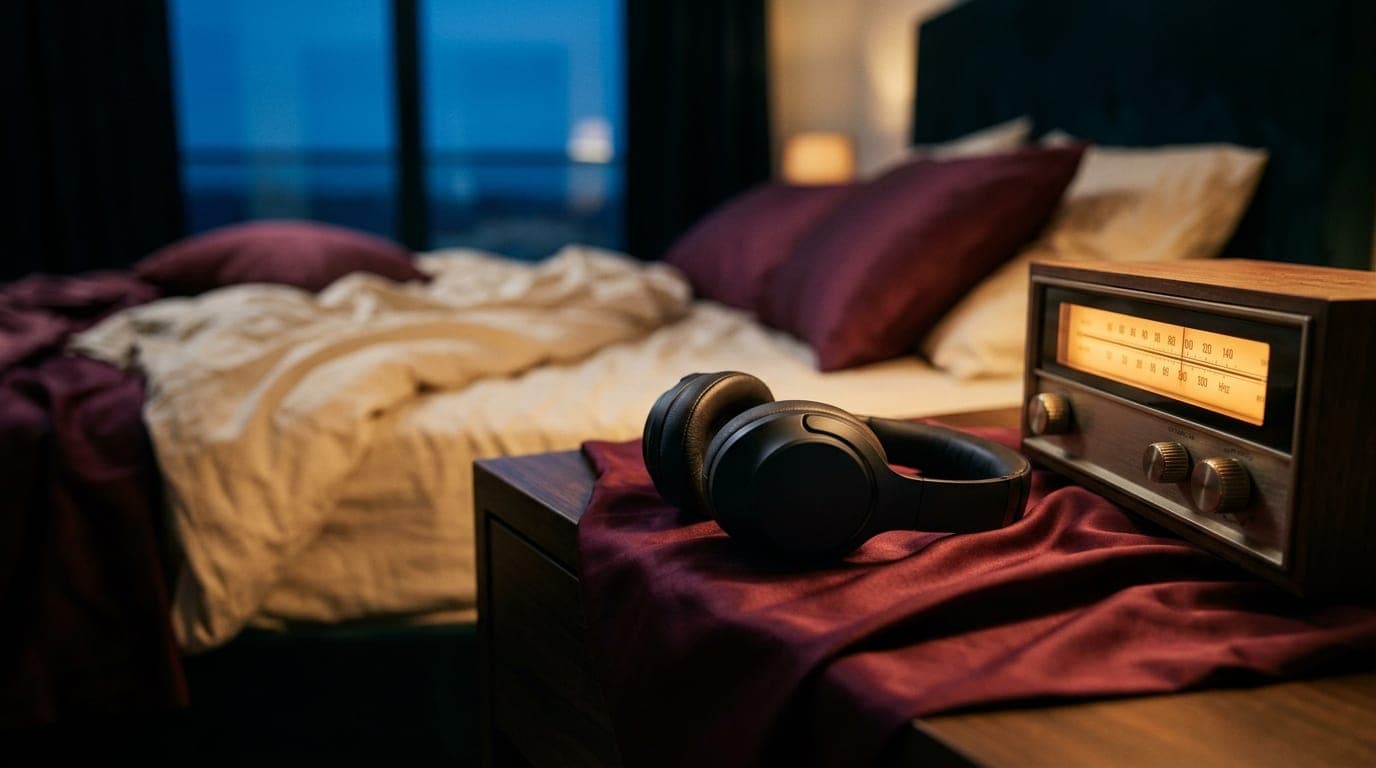
Warm amber and deep red are the most effective colors. Red light, in particular, does not interfere with the body's production of melatonin or disrupt night vision. This allows you to maintain a sense of intimacy and relaxation without the jarring effect of 'blue' light from screens or standard LEDs, which can trigger a cortisol response and dampen arousal.
Clutter creates 'cognitive load' and associative interference. When you see laundry or work papers, your brain subconsciously shifts into 'task mode,' which is the opposite of the relaxed, parasympathetic state required for arousal. A clean, minimalist environment when curating-a-sensory-bedroom-sanctuary reduces background stress and allows you to focus entirely on physical sensations.
Yes, for both sensory and physiological reasons. Silk is a natural protein fiber that is incredibly smooth, reducing tactile friction and skin irritation. It also regulates temperature better than synthetic fibers, preventing the 'overheating' that can pull you out of an intimate moment. The tactile 'slip' of silk is a powerful sensory trigger that enhances the feeling of skin-to-skin contact.
You can achieve significant acoustic damping using soft goods. Heavy, floor-to-ceiling blackout curtains act as sound baffles. Adding a thick area rug with a rug pad underneath can absorb echoes. Even an upholstered headboard or hanging a decorative tapestry on a shared wall can help create a 'sonic bubble' that makes the room feel more private and secure.
Communication is key when curating-a-sensory-bedroom-sanctuary. Use 'neutral' sensory upgrades first—like high-quality sheets or soundproofing—which benefit everyone. For lighting and scent, utilize smart systems that allow for customization. Finding a 'middle ground' (like a specific music volume or light level) can actually become a bonding exercise that increases your overall compatibility and intimacy.
As of August 2026, the intersection of interior design and sexual wellness has moved beyond simple aesthetics into the realm of "sensory hacking." We no longer view the bedroom as just a place to sleep; it is a neurological staging ground where the environment either facilitates or inhibits the brain's ability to transition into a state of arousal. For too many people, the bedroom has become an extension of the office or a storage unit for laundry, creating a psychological barrier that makes it nearly impossible to "turn on" after a long day.
The secret to curating-a-sensory-bedroom-sanctuary lies in understanding that the human brain is constantly scanning its surroundings for threats and distractions. When your room is filled with blue light from screens, the hum of distant traffic, or the abrasive feel of cheap polyester sheets, your nervous system remains in a state of low-level vigilance. By intentionally redesigning the lighting, texture, and acoustics of your space, you can signal to your amygdala that it is safe to downregulate, allowing the reward centers of the brain to take the lead. This isn't about luxury for luxury’s sake; it’s about biological optimization.
Sponsored Content
In this guide, we will break down the specific physical modifications you can make to your environment to maximize your sensory potential. Whether you are flying solo or navigating a long-term partnership, these adjustments are designed to remove the "friction" from your sex life. We’re moving past the clichéd rose petals and into the science of how your skin, eyes, and ears communicate with your libido. Let’s build a space that works for you, rather than against you.
The Role of Atmospheric Lighting in Arousal
In the process of curating-a-sensory-bedroom-sanctuary, lighting serves as the primary environmental cue for the brain’s circadian and sexual rhythms. By utilizing warm-spectrum tones and avoiding harsh overhead "blue" light, you can stimulate the production of oxytocin and melatonin, which lower cortisol levels and create a visual atmosphere that softens features and enhances physical intimacy.
Lighting is the most powerful tool in your arsenal because it is the fastest way to change the "vibe" of a room. Most modern homes are equipped with "daylight" or "cool white" LED bulbs that vibrate at a frequency designed to keep you alert and productive. This is the antithesis of what you need for arousal. When you are curating-a-sensory-bedroom-sanctuary, your goal is to mimic the "golden hour"—that soft, amber glow that occurs naturally at sunset. This specific wavelength of light is less "clinical" and more "primal." It hides imperfections, reduces self-consciousness, and allows the pupils to dilate, which is a physiological sign of attraction.
Consider the installation of smart lighting systems like those offered by Philips Hue or LIFX. These allow you to program "scenes" that you can trigger with a single tap on your phone or a voice command. As of 2026, many people are opting for "sunset fades," where the room’s lighting slowly transitions from a soft amber to a deep, dark red over thirty minutes. Red light is particularly effective because it does not interfere with night vision or suppress melatonin, keeping the body in a relaxed, receptive state. If you aren't ready for a full tech overhaul, simply swapping your bedside lamps with 25-watt equivalent "vintage" Edison bulbs can achieve a similar effect for a fraction of the cost.
Tactile Luxury: Why Textures Define the Physical Experience
Curating-a-sensory-bedroom-sanctuary requires a deep commitment to tactile variety, as the skin is the body's largest sensory organ and a direct gateway to the arousal centers of the brain. High-quality natural fibers like mulberry silk, organic linen, or high-GSM bamboo regulate body temperature and provide a "skin-to-skin" feel that synthetic materials simply cannot replicate.
The science of touch is often overlooked in bedroom design. When your skin comes into contact with a rough or "scratchy" fabric, your brain registers it as a minor irritant. While you might not consciously notice it, these micro-irritations can be enough to pull you out of the moment. Research has shown that environmental comfort is a prerequisite for sustained sexual focus. In fact, 78% of people report they feel more relaxed and "in the mood" in a bedroom that features a pleasant scent and soft textures (Sleep Foundation, 2023). When you invest in your bedding, you aren't just buying sheets; you are buying a tactile landscape that encourages touch.
Furthermore, relationship satisfaction is often tied to the shared environment. A survey found that 45% of couples report that proactive bedroom improvements, such as upgrading to premium mattresses or bedding, lead to higher levels of intimacy and relationship satisfaction (eHarmony, 2023). When curating-a-sensory-bedroom-sanctuary, don't stop at the sheets. Consider the floor. A high-pile faux-fur rug or a soft wool carpet provides a soft landing for feet and creates an alternative space for intimacy beyond the mattress. The goal is to make every square inch of the room feel like an invitation to be naked. If a surface feels cold or clinical, it’s a barrier to the experience.
Sonic Intimacy and Acoustic Design
Managing the auditory landscape is a critical, yet often neglected, component of curating-a-sensory-bedroom-sanctuary. Sound dampening and the introduction of intentional "soundscapes" help to mask external distractions—like street noise or thin apartment walls—allowing the brain to focus entirely on the immediate sensory input of a partner or one’s own body.
The "vigilance" response of the human ear is highly sensitive. If you are constantly listening for the sound of a neighbor’s door or a car alarm, your brain stays in "monitor mode." You cannot fully surrender to pleasure while you are monitoring your environment. Curating-a-sensory-bedroom-sanctuary means building an acoustic "bubble." This can be achieved through both passive and active means. Passive methods include heavy blackout curtains, which not only block light but also absorb sound, and strategic placement of furniture to break up echoes. Active methods involve high-fidelity sound systems that provide a clean, immersive audio experience.
To truly master the acoustics of your sanctuary, follow these four steps:
**Introduce a High-Quality Sound Mask:** Use a dedicated white noise machine or a high-end speaker (like a Sonos Era 100) to create a consistent "floor" of sound. This prevents sudden outside noises from breaking your concentration.
**Layer Your Playlists:** Music shouldn't be an afterthought. Create "slow-build" playlists that start with ambient, non-lyrical tracks and transition into more rhythmic, bass-heavy sounds. Avoid songs with distracting lyrics that might pull your brain into "analytical mode."
**Acoustic Treatment:** If your room is "echoey," it will feel cold. Adding soft goods like tapestries, area rugs, and even upholstered headboards will absorb sound waves and make the room feel much more intimate and private.
**The "Phone-Free" Zone:** Acoustic design also means the absence of unwanted sounds. The "ping" of a work email or a social media notification is the ultimate mood killer. Use a dedicated charging station *outside* the bedroom to ensure the only sounds in the room are the ones you’ve invited in.
By controlling the "sonic envelope" of your room, you create a sense of psychological safety. When you know that your sounds are contained within the room and the outside world is "muted," you feel a greater freedom to be vocal and expressive during intimacy. This is a foundational element of curating-a-sensory-bedroom-sanctuary that turns a standard bedroom into a private theater of pleasure.
Common Pitfalls vs. Pro-Tier Enhancements
When curating-a-sensory-bedroom-sanctuary, the most common mistake is focusing on "sexy" cliches—like mirrors on the ceiling or bright red walls—rather than the biological needs of the human nervous system. A truly effective sanctuary prioritizes comfort, cleanliness, and subtle sensory triggers that allow the body to transition naturally into a state of high arousal and deep connection.
Many people think that "curating" means "decorating," but in the context of sex and intimacy, less is often more. A room cluttered with laundry, work laptops, or even too many decorative pillows creates "cognitive load." Your brain sees the laundry and thinks about chores; it sees the laptop and thinks about deadlines. This is known as "associative interference." To fix this, your sanctuary must be a "zero-demand" zone. Every item in the room should either serve the purpose of rest or the purpose of pleasure. If it doesn't do one of those two things, it belongs in another room.
The following table compares the traditional "amateur" approach to bedroom design with the "pro-tier" sensory sanctuary approach:
Feature
The "Standard" Approach
The "Sensory Sanctuary" Approach
**Lighting**
Standard overhead LEDs or a single bright lamp.
Layered lighting: Smart bulbs, floor-level LEDs, and candles.
**Bedding**
Polyester blends or old cotton sheets.
Mulberry silk, high-thread-count linen, or bamboo.
**Sound**
Silence (broken by outside noise) or a TV.
Intentional soundscapes, white noise, and acoustic damping.
**Technology**
TV on the wall, phones on the nightstand.
Technology-free zone (except for music/lighting control).
**Organization**
Visible laundry, work desk in the corner.
Hidden storage, zero work-related items, minimalist decor.
As you can see, the shift is from "utility" to "experience." When you are curating-a-sensory-bedroom-sanctuary, you are essentially building a sensory deprivation tank for the world's stresses and a sensory *amplification* tank for pleasure. It is a dedicated space where the rules of the outside world no longer apply. This psychological "border" is what allows for the deep vulnerability required for great sex.
"Your bedroom should be the only place in the world where your 'to-do' list doesn't exist. If you can't look around the room and feel your heart rate drop, you haven't finished the design."
Ultimately, the physical environment acts as a partner in your sex life. It can either be an obstacle you have to overcome or a wind at your back. By taking the time to curate the lighting, textures, and sounds of your space, you are signaling to yourself (and any partners) that pleasure is a priority worth investing in. In a world that constantly demands our attention, creating a sanctuary is an act of radical self-care—and the benefits, both in and out of the bedroom, are immeasurable.
Remember that this is an iterative process. You don't need to buy a $5,000 mattress today. Start with a single smart bulb. Clear the clutter off your nightstand. Buy one set of high-quality sheets. Notice how your body responds to these changes. When you start curating-a-sensory-bedroom-sanctuary, you’ll find that the more you give to the space, the more the space gives back to you in the form of deeper relaxation and more intense, focused arousal.
Sponsored Content
The Architecture of Desire: How to Reclaim Your Bedroom for Pleasure | PillowTalk Daily