PillowTalk AI Labs
Want honest feedback on your approach?
Our AI tools analyze patterns and give you straight answers.

Our AI tools analyze patterns and give you straight answers.

If you experience persistent guilt after sex, feel like you're 'performing' a role rather than being yourself, or have desires you're afraid to admit even

The most common early signs are vaginal dryness and a 'lag' in arousal. You might find that things that used to feel good now feel neutral or even irritati
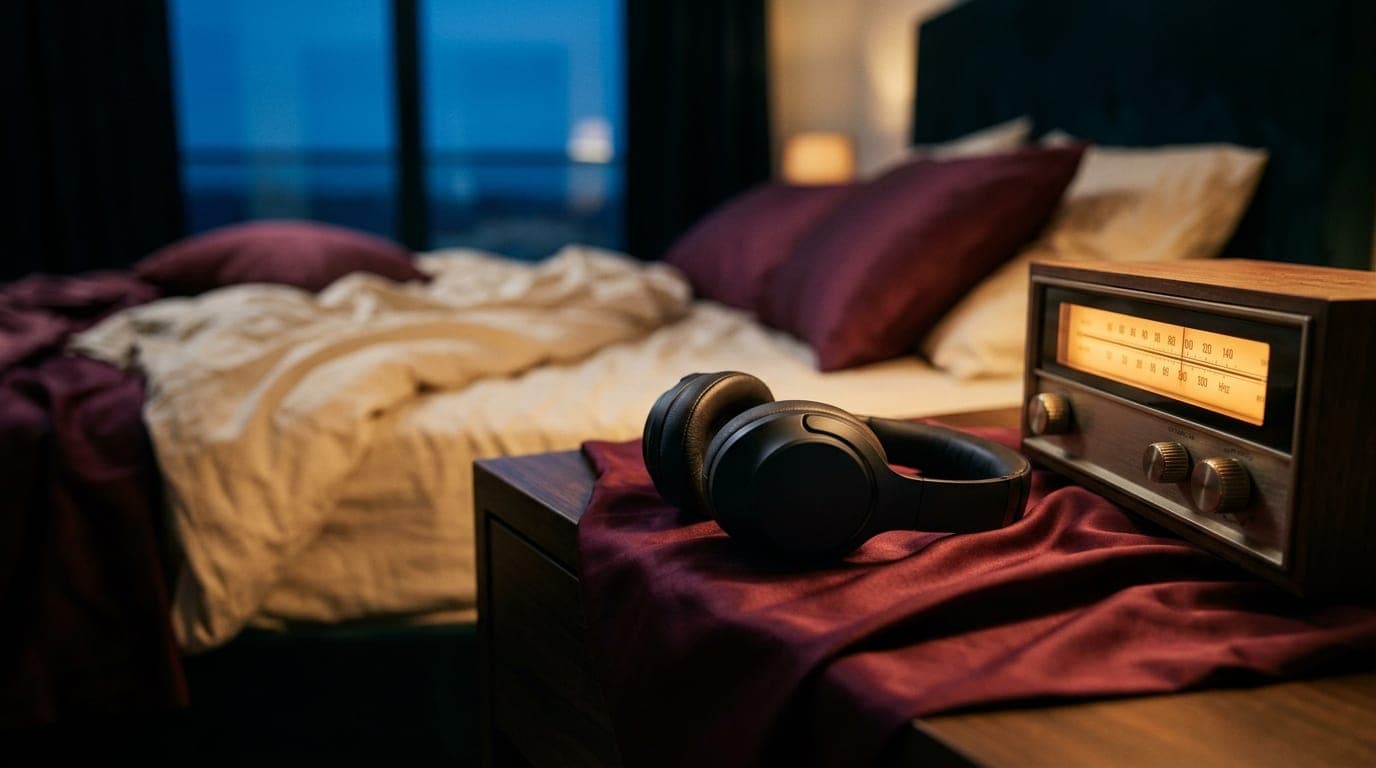
Not necessarily, but they must be stereo. The effect relies on your brain receiving two different frequencies in each ear simultaneously. High-quality over
Reading and writing erotica serves as a powerful mental warm-up because it engages the brain’s neocortex and limbic system to cultivate "responsive desire." As of August 2026, the sexual wellness movement has pivoted toward "cognitive eroticism," recognizing that the most potent sex organ we possess is the three-pound mass of gray matter between our ears. By shifting our focus from passive visual consumption to active literary engagement, we give ourselves the permission to explore nuances of power, sensation, and identity that are often lost in the frantic pace of modern life.
In a world where we are constantly tethered to our devices—swiping through Bumble or Hinge (which integrated AI-driven compatibility "vibe-checks" earlier this year) in search of connection—we often forget that intimacy requires a "runway." We expect ourselves to go from 0 to 100 the moment we step into the bedroom, ignoring the fact that the female arousal cycle, and even many male cycles, benefit significantly from a slow-burn psychological build-up. Erotic literature provides that runway. It isn't just about the "smut"; it’s about the psychology of anticipation, the development of character, and the articulation of needs we might be too shy to say out loud.
The transition from a high-pressure work environment to a state of erotic openness is rarely instantaneous. Many individuals find that they struggle with "switching off" the analytical brain. Engaging with a well-crafted erotic narrative allows the reader to enter a flow state, similar to meditation, where the external world fades away and the internal sensory world takes precedence. Unlike visual media, which provides a finished image, prose requires the brain to "render" the scene. This active participation means you are co-creating the fantasy, tailoring the height, scent, and touch of the characters to your specific preferences.
For those navigating the dating world on platforms like eHarmony or Match, developing a literary appetite for erotica can actually improve communication skills. When you read about characters articulating their boundaries or describing their sensations, you're learning a vocabulary for your own experiences. You start to understand the difference between "I like this" and "I like the specific way the pressure feels against my nerve endings." This granularity is what transforms a standard sexual encounter into a tailored experience. Furthermore, for men focusing on longevity and performance, reading can lower the performance anxiety that often comes with visual stimuli. By slowing down the "script" of sex through literature, the nervous system remains in a parasympathetic state (rest and digest) rather than a sympathetic "fight or flight" state, which is crucial for maintaining blood flow and erectile quality.
Consider the following comparison of how different media types impact our mental state during the "warm-up" phase:
| Feature | Visual Media (Video) | Literary Erotica (Reading) | Creative Erotica (Writing) |
|---|---|---|---|
| Brain Activity | Passive Observation | Active Visualization | Active Creation/Scripting |
| Pacing | Determined by the film | Determined by the reader | Highly customizable |
| Psychological Depth | Low (Focus on physical) | High (Focus on emotion/internal) | Maximum (Focus on personal truth) |
| Arousal Type | Spontaneous/Instant | Responsive/Slow-burn | Reflective/Integrative |
Writing erotica is not about becoming the next great novelist; it is about externalizing your internal desires to see them more clearly. When we write, we are forced to move past vague notions of "sex" and into the specifics of "dynamic." Are you craving more dominance? Do you want to explore a specific sensory element, like the scent of sandalwood or the feeling of silk? By putting pen to paper (or fingers to keyboard), you are creating a blueprint for your future self. This process is deeply empowering, especially for those who have felt like passive participants in their own sex lives. According to 2025 longitudinal data from the Sexual Wellness Institute, approximately 84% of adults engage in sexual fantasy at least once a month, yet a significantly lower percentage feel comfortable sharing those fantasies with a partner. Writing acts as the safe middle ground.
For individuals using tools like Bathmate to enhance their physical confidence, writing can provide the corresponding mental confidence. It allows you to cast yourself as the protagonist who is capable, desired, and sexually fluent. This "mental rehearsal" has been shown in various psychological studies to improve actual performance and reduce anxiety in the moment. When you have already "lived" a successful, pleasurable encounter in your mind through your own writing, your body is less likely to react with stress when the real thing happens. You’ve already written the happy ending. If you’re currently single and looking for something long-term on eHarmony, knowing your "erotic script" through writing helps you filter for compatibility much faster. You aren't just looking for "someone"; you're looking for someone who fits into the narrative of pleasure you’ve defined for yourself.
Integrating erotica into your life should feel like a luxury, not a chore; it’s about carving out a "third space" between your public life and your private bedroom life. To make this work, you need to treat your reading and writing time as sacred, perhaps by creating a sensory environment using brands like Set Adrift to set the mood with calming scents and soft textures. This signals to your brain that the "work day" is over and the "sensual day" has begun.
By engaging in these practices, you are effectively training your brain to prioritize pleasure. As of August 2026, we understand more than ever that libido is not a "drive" like hunger that just happens to us; it is often a system that needs to be "turned on" through intentional stimulation. Using literature is like priming a pump. Once the water starts flowing, it becomes much easier to keep the momentum going during physical intimacy.
The most significant pitfall in using erotic literature as a tool is falling into the "perfection trap," where you expect your partner or your own body to move, sound, and respond exactly like a character in a book. Real bodies make noises, people get distracted, and sometimes the "climax" isn't a world-shattering event—and that is perfectly okay. Erotica should be used as a source of *inspiration*, not a standard for *evaluation*. If you find yourself feeling inadequate because you don't look like a cover model or your bedroom doesn't look like a five-star hotel suite, you are missing the point of the exercise. The goal is to stimulate your imagination, not to create a rigid checklist of expectations.
Advanced practitioners of erotic exploration use literature to push their boundaries in a "sandbox" environment. You can read about a dynamic—perhaps something more adventurous or taboo—to see how your mind reacts to it before ever deciding to try it in person. This is a vital part of "sexual self-discovery." If a story makes you feel uncomfortable or "cringey," that’s valuable data too. It tells you where your boundaries are. Conversely, if something you thought you’d hate ends up being intriguing, you’ve discovered a new "room" in your erotic mansion. Use this knowledge when communicating with partners you meet on Match or Bumble. Instead of saying "I want to try X," you can say, "I read this scene where X happened, and it really piqued my curiosity. What do you think?" This frames the exploration as a shared intellectual and sensual journey rather than a demand.
The brain doesn't distinguish between a vivid imagination and a lived experience as much as we think; when you read a story that makes your heart race, your body is already saying 'yes' to the possibility of pleasure.
Ultimately, the goal of erotic literary exploration is to reclaim your narrative. In a culture that often dictates what we should find sexy, reading and writing allow us to discover what we *actually* find sexy. It’s about more than just boosting libido; it’s about fostering a deep, shame-free relationship with your own imagination. Whether you’re looking for a serious connection on eHarmony or looking to spice up a long-term marriage, the stories you tell yourself are the foundation of the life you lead. So, pick up a book, grab a pen, and start exploring the vast, beautiful landscape of your own desire. Your brain—and your bedroom—will thank you.