PillowTalk AI Labs
Want honest feedback on your approach?
Our AI tools analyze patterns and give you straight answers.

Our AI tools analyze patterns and give you straight answers.
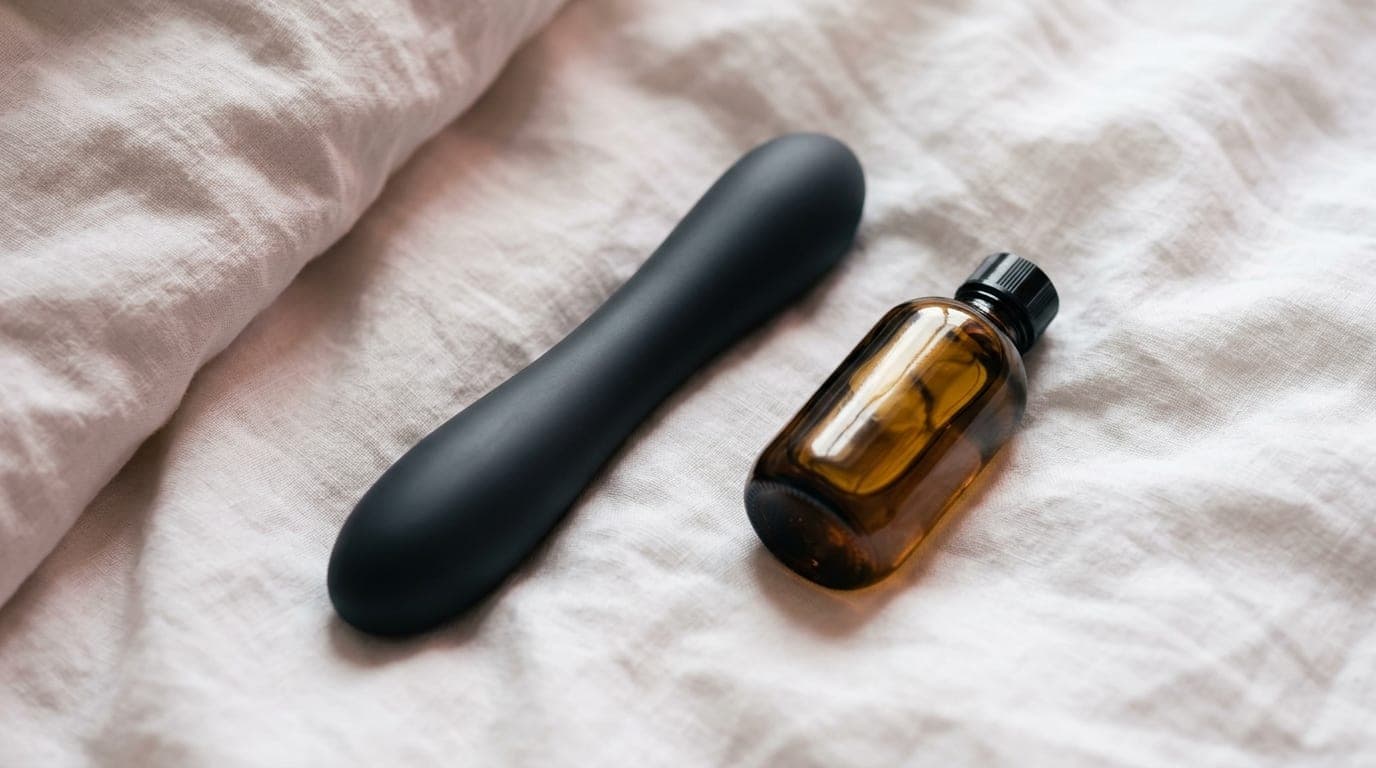
Medical-grade silicone is the gold standard because it is non-porous, hypoallergenic, and warms to body temperature. Avoid 'jelly' or 'TPE' materials as th

Yes, for most people, daily self-pleasure is a healthy way to manage stress and maintain pelvic health, provided it doesn't interfere with your daily respo
Yes, urinating after sex is highly recommended for all genders to flush out any bacteria that may have entered the urethra, significantly reducing the risk
The G-spot is not a distinct, standalone organ or a magical "button," but rather a highly sensitive anatomical zone located on the anterior (front) wall of the vagina that represents the internal extension of the clitoral network and the urethral sponge. As of August 2026, the scientific community largely views this area as part of the "clitourethrovaginal (CUV) complex," a functional unit where various tissues—including the internal roots of the clitoris, the urethra, and the Skene’s glands—converge to create a site of intense sensory potential. Understanding this region requires moving past the myth of the "magic button" and embracing a more holistic view of how internal and external structures work in tandem to facilitate pleasure.
Historically, the G-spot was named after Dr. Ernst Gräfenberg, who first described this erogenous zone in the 1950s, but it wasn't popularized until the 1980s. Since then, it has been the subject of both obsession and frustration for many individuals and couples. The reality is that while almost everyone with this anatomy has a G-spot region, the sensitivity and the type of sensation it produces can vary wildly from person to person. For some, it is the key to powerful, blending orgasms; for others, it may simply feel like the urge to urinate. This guide is designed to strip away the shame and the mystery, providing you with the anatomical roadmap and practical techniques needed to explore this zone effectively and comfortably.
The G-spot is a multifaceted region located roughly one to three inches inside the vaginal opening on the upper wall, consisting of the urethral sponge, the Skene’s glands, and the internal structures of the clitoris. When we talk about G-spot stimulation, we are actually talking about indirect stimulation of the clitoral crura (the "legs" of the clitoris that wrap around the vaginal canal) and the bulbs of the vestibule. This area is rich in nerve endings and erectile tissue that engorges with blood during arousal, making it more prominent and sensitive as excitement levels rise. This is why many people find it difficult to locate the G-spot when they are not already aroused; the tissue needs to be "primed" to be easily felt.
The Skene’s glands, often referred to as the "female prostate," are also located in this region. These glands are responsible for producing the fluid sometimes released during female ejaculation. In terms of sensation, the urethral sponge—a cushion of erectile tissue that surrounds the urethra—acts as a protective barrier during penetration and is highly responsive to pressure. Understanding this interconnectedness is vital for successful exploration. It isn't just about poking a specific point; it’s about engaging a complex network of tissues that respond to different types of touch, pressure, and rhythm. Whether you are navigating the dating world on Hinge or Bumble and looking to discuss sexual compatibility with a new partner, or you are in a long-term relationship cultivated through eHarmony or Match, knowing your own anatomy is the first step toward communicative and satisfying intimacy.
To better understand the differences between the two most discussed areas of internal and external pleasure, consider the following comparison:
| Feature | External Clitoris (Glans) | G-Spot (Internal CUV Complex) |
|---|---|---|
| Primary Location | Top of the vulva, where labia meet. | Anterior vaginal wall (1-3 inches in). |
| Nerve Density | Extremely high; direct stimulation. | Variable; involves deeper tissue pressure. |
| Primary Sensation | Sharp, intense, focused. | Deep, full, often described as "thrumming." |
| Physical Indicator | Visible swelling of the glans. | Engorgement of the urethral sponge. |
| Common Outcome | Clitoral orgasm (most common). | Blended orgasm or ejaculation. |
To locate the G-spot, you or a partner should insert one or two well-lubricated fingers into the vagina with the palm facing upward (toward the belly button) and use a firm "come hither" curling motion to feel for a textured, slightly ridged area. While the rest of the vaginal wall often feels smooth and soft, like the inside of a cheek, the G-spot area typically feels slightly rougher or "corrugated," similar to the roof of the mouth. It is important to note that this area is much easier to identify when the individual is already highly aroused, as the tissues fill with blood and the "spot" becomes more pronounced and firm to the touch.
Patience is key during this process. Start with external stimulation to ensure the body is ready for internal exploration. If you are using a toy, such as those from Set Adrift or other high-quality wellness brands, look for one with a curved tip specifically designed to reach the anterior wall. When you find the area, you might notice an immediate sensation that feels like the need to pee. This is perfectly normal and is caused by the pressure on the urethral sponge and bladder. If you can relax through that initial sensation, it often gives way to a deep, pleasurable feeling. It is also helpful to experiment with different depths; for some, the most sensitive area is very shallow, while for others, it is a bit deeper.
Communication is the most important tool in this discovery phase. If you are working with a partner, provide real-time feedback. Phrases like "a little higher," "more pressure," or "stay right there" are essential. According to a 2025 meta-analysis published in the Journal of Sexual Medicine, approximately 19% of women report reaching orgasm through vaginal penetration alone without additional clitoral stimulation. This statistic highlights why locating the G-spot is often more about enhancing the overall experience and achieving a "blended" sensation rather than seeking a singular, isolated event. Understanding this can take the pressure off "finding" it and turn the process into a fun, collaborative exploration.
Effective G-spot stimulation relies on consistent, rhythmic pressure applied to the anterior wall, often utilizing a "hooking" motion rather than a simple in-and-out thrusting movement. Because the tissues of the CUV complex are deeper than the surface nerves of the external clitoris, they generally require more significant pressure to be activated. This is why many people find that "manual" stimulation (using fingers) or specific curved toys are more effective than traditional intercourse for targeting this specific zone. However, certain positions can help align the anatomy to maximize contact during penetrative sex.
For those interested in enhancing their overall sexual health and pelvic floor strength, incorporating tools or exercises can be beneficial. While brands like Bathmate focus on male-specific enhancements, the principle of blood flow and tissue health applies to all. Maintaining a strong pelvic floor (through Kegel exercises or weighted trainers) can actually make the sensations of G-spot stimulation feel more intense, as the muscles around the CUV complex are more reactive and capable of stronger contractions during orgasm.
The most common mistake people make when exploring G-spot stimulation is rushing into internal work without sufficient arousal or lubrication, which can lead to discomfort rather than pleasure. Many people also make the mistake of applying "poking" pressure rather than "stroking" or "massaging" pressure. The G-spot is not a button to be pressed; it is a zone to be engaged. If you find that stimulation feels irritating or like you just have to go to the bathroom, you might be focused too much on the urethra and not enough on the surrounding clitoral structures. Shift the angle slightly or decrease the intensity of the pressure until the sensation becomes pleasurable.
Another mistake is the "orgasm-only" mindset. If you are hyper-focused on reaching a specific climax, you may miss the subtle, build-up sensations that make G-spot play enjoyable. This can lead to performance anxiety, whether you're with a long-term partner or someone you just met through a platform like Match. Advanced G-spot play often involves "edging"—the practice of bringing someone close to the point of orgasm and then backing off—to increase the blood flow and sensitivity of the CUV complex. This builds a "reservoir" of tension that can lead to more powerful, full-body releases.
At the advanced level, many people explore the phenomenon of female ejaculation (squirting). This is the release of fluid from the Skene’s glands during intense G-spot stimulation. To facilitate this, one often needs to "let go" of the feeling that they need to urinate and instead push against the sensation. It requires a high level of comfort with one's body and usually a significant amount of towel coverage. It is a natural physiological response for many, though not all, and should be viewed as a potential byproduct of pleasure rather than a requirement for a "good" sexual experience.
Finally, remember that anatomy is diverse. As we understand more about the "clitoral complex," we realize that the distance between the clitoris and the urinary meatus (the C-U distance) varies. Those with a shorter distance often find G-spot and vaginal stimulation more inherently pleasurable because the structures are closer together. If you find it difficult to achieve pleasure through this specific zone, it is not a "fail"—it is simply a reflection of your unique anatomical map. Focus on what feels good, use the tools and apps at your disposal to foster better communication, and keep the exploration shame-free.
The G-spot isn't a hidden treasure you need a map to find; it's a part of your body's natural architecture that responds best when you stop looking for a 'result' and start enjoying the sensation of the journey.