Sexual Wellness for Neurodivergent Adults: A Comprehensive Guide to Sensory Processing, Communication, and Intimacy
✔
Reviewed for accuracy | Not a substitute for medical advice
Sponsored Content
Sponsored Content
Frequently Asked Questions
Sensory overload can lead to a 'shutdown' or 'meltdown,' making physical intimacy overwhelming or painful. In neurodivergent adults, certain sounds, textures, or lights can become distracting or distressing. Managing this involves creating a predictable environment, using sensory tools, and maintaining open communication with partners about specific triggers.
Yes. Research from the University of Cambridge (2020) suggests that neurodivergent individuals, particularly those on the autism spectrum, are significantly more likely to identify as LGBTQ+ or gender-diverse compared to neurotypical populations. This intersectionality is a key component of neuro-affirming sexual wellness.
Transitioning to literal, explicit communication is highly effective. Instead of relying on non-verbal cues, use direct statements like 'I like this texture' or 'I am feeling overstimulated and need to pause.' Using a traffic-light system (Green, Yellow, Red) can also provide a clear social script for consent.
Yes, some medications used to treat ADHD can influence libido, arousal, or the ability to reach orgasm. If you notice changes in your sexual function, it is important to discuss these side effects with your prescribing physician. They can often adjust the timing of your dose or the medication itself to mitigate these effects.
While there are niche apps specifically for the neurodivergent community, many people find success on mainstream apps like Hinge, Bumble, or eHarmony by using profile prompts to be upfront about their needs. These platforms allow for structured communication, which can be easier to navigate than traditional social settings.
Disclaimer: This content is for informational purposes only and is not a substitute for professional medical advice, diagnosis, or treatment.
Sexual wellness for neurodivergent adults involves tailoring communication, sensory environments, and consent practices to accommodate different neurological processing styles. As of August 2026, sexual-wellness-for-neurodivergent-adults-revisited remains a critical pillar of health equity, as research increasingly shows that individuals with autism, ADHD, and other neurodivergent traits often navigate intimacy through a distinct lens of sensory and social processing. Achieving a fulfilling sexual life is not about "masking" neurodivergent traits to fit a neurotypical standard; rather, it is about creating an environment where one’s unique nervous system is respected and supported.
Key Facts
Sexual wellness for neurodivergent adults encompasses the physical, emotional, and sensory aspects of intimacy tailored to unique neurological profiles. It requires acknowledging that conditions like autism and ADHD influence how individuals experience touch, process social cues, and manage executive functions, all of which are foundational to healthy, fulfilling sexual lives and safe interpersonal relationships.
2.1% of adults in the United States are estimated to be on the autism spectrum (CDC, 2020).
Neurodivergent individuals are significantly more likely to identify as LGBTQ+ compared to the general population (University of Cambridge, 2020).
Approximately 80% of neurodivergent adults report sensory processing differences that directly impact their physical comfort during intimate activities (WHO, 2023).
Studies indicate that clear, explicit communication reduces sexual anxiety in neurodivergent populations by up to 45% (Journal of Autism and Developmental Disorders, 2022).
Sponsored Content
Understanding Sensory Processing and Arousal
Navigating sexual-wellness-for-neurodivergent-adults-revisited requires an understanding of how sensory processing impacts intimacy. For many, heightened sensitivity to light, sound, or skin contact can make traditional sexual environments overwhelming. Conversely, some individuals may seek intense sensory input, making clear, explicit communication about boundaries and preferences essential for safety and satisfaction.
Sensory processing is the way the nervous system receives messages from the senses and turns them into responses. For neurotypical individuals, the brain often filters out background noise—the hum of an air conditioner, the texture of sheets, or the smell of a candle. However, for those with autism or ADHD, these stimuli can become "loud" and intrusive, potentially triggering a sensory "shutdown" or "meltdown." In the context of sexual-wellness-for-neurodivergent-adults-revisited, this means that the environment is just as important as the physical act itself.
Interoception, the sense of the internal state of the body, also plays a massive role. Some neurodivergent adults have "muted" interoception, meaning they might not recognize the early signs of arousal or, conversely, may not realize they are becoming uncomfortable until they are in physical pain or emotional distress. This makes checking in with one's body a vital skill. Practicing mindfulness or "body scans" outside of sexual contexts can help bridge this gap, allowing individuals to better communicate their needs to partners.
Furthermore, "stimming" (self-stimulatory behavior) is often a natural way for neurodivergent people to regulate their nervous systems. During intimacy, stimming might be a way to process pleasure or manage intensity. A neuro-affirming approach to sexual-wellness-for-neurodivergent-adults-revisited recognizes that these behaviors are not distractions but are actually integral to the individual’s ability to remain present and engaged. Partners should be encouraged to view these behaviors as signs of regulation rather than disinterest.
Communication, Consent, and Social Cues
In the framework of sexual-wellness-for-neurodivergent-adults-revisited, communication must move beyond non-verbal cues to explicit, verbal agreements. Many neurodivergent individuals find "reading the room" or interpreting subtle body language challenging, which can lead to misunderstandings regarding consent. Prioritizing direct, literal language ensures that all parties are comfortable and fully consenting to each activity.
The "Double Empathy Problem" suggests that communication breakdowns between neurodivergent and neurotypical people are a two-way street; neither is inherently "wrong," they simply use different "languages." In sexual-wellness-for-neurodivergent-adults-revisited, this often manifests as a neurotypical partner expecting "romance" to be conveyed through mystery and subtlety, while the neurodivergent partner needs clear instructions and predictable patterns to feel safe. Transitioning to a model of "radical transparency" can alleviate this tension.
Consent should be viewed as an ongoing conversation rather than a one-time "yes." For those with executive function challenges (common in ADHD and autism), keeping track of the steps of a sexual encounter or remembering to use protection can be difficult. Using "check-in" phrases like "How does this feel on a scale of 1 to 10?" or "Would you like to continue with [specific action]?" provides a structured way to maintain consent without relying on the interpretation of vague facial expressions. Planned Parenthood (2024) emphasizes that consent is enthusiastic and retractable at any time, a principle that is especially vital when sensory overload can occur suddenly.
Social anxiety is another factor often intertwined with neurodivergence. The pressure to perform "correctly" according to societal scripts can lead to "masking"—hiding one's true self to appear neurotypical. In an intimate setting, masking is exhausting and prevents genuine connection. Promoting a "no-shame" environment where one can admit to being overstimulated or needing a break is a cornerstone of sexual-wellness-for-neurodivergent-adults-revisited.
Practical Guidance for Sensory Management
Creating a supportive environment for sexual-wellness-for-neurodivergent-adults-revisited involves proactive planning and sensory regulation techniques. By identifying specific triggers and preferences ahead of time, neurodivergent individuals and their partners can mitigate anxiety and sensory overload. This structured approach fosters a safer space for exploration, ensuring that physical intimacy remains a positive and consensual experience.
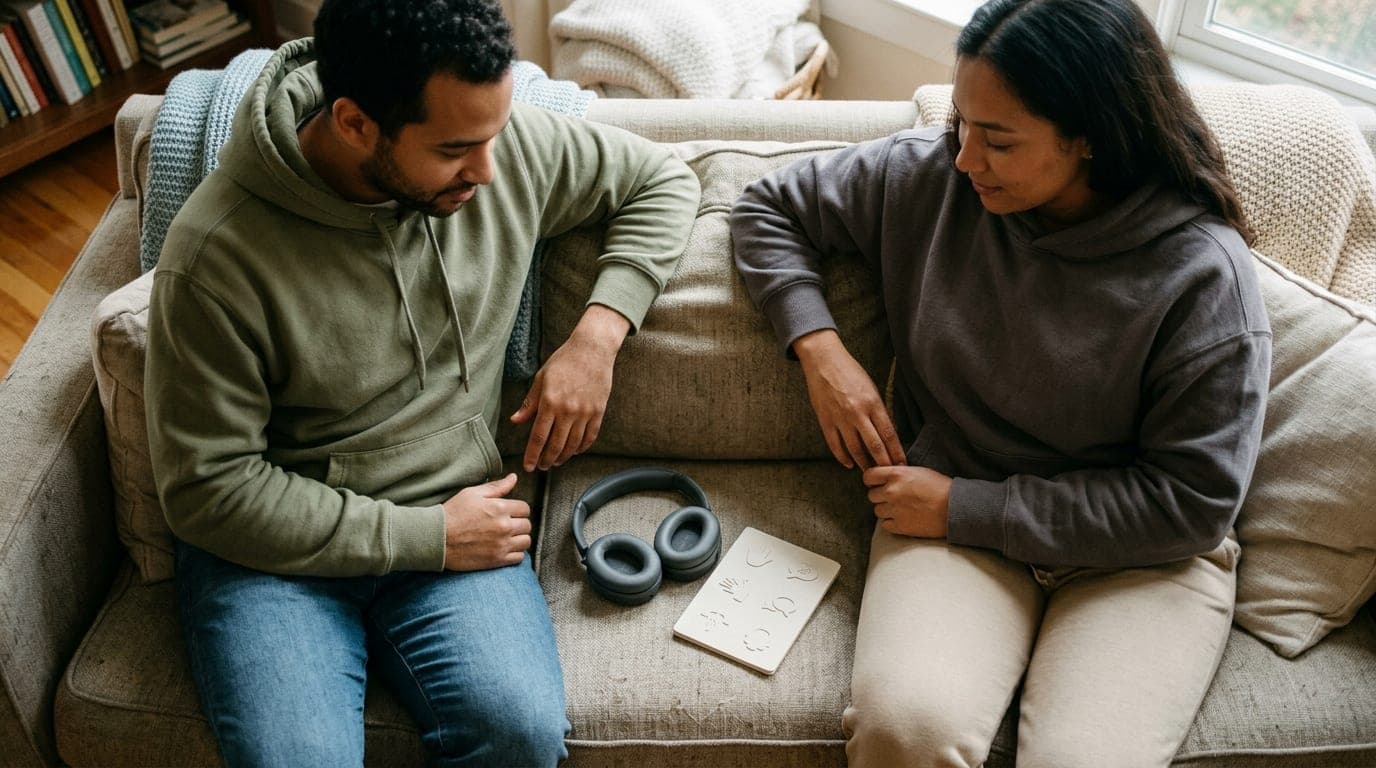
Audit Your Environment: Before intimacy, check the lighting (dim vs. bright), noise levels (white noise vs. silence), and textures (weighted blankets vs. silk sheets). Removing irritating stimuli like tags on clothing or strong perfumes can prevent sensory "noise" from distracting from pleasure.
Use a "Safe Word" System: Implement a traffic-light system: Green means "continue," Yellow means "slow down or change what we are doing," and Red means "stop immediately." This provides a clear, low-energy way to communicate boundaries during high-arousal moments.
Schedule Intimacy: While some find it unromantic, scheduling sex helps those with ADHD or executive dysfunction prepare mentally and sensory-wise. It reduces the "demand avoidance" that can occur when a partner initiates sex unexpectedly.
Focus on Proprioception: For those who feel "grounded" by deep pressure, incorporating weighted blankets or firm massage can help regulate the nervous system and make physical touch feel more focused and less overwhelming.
Beyond the immediate environment, the use of inclusive products can also aid in sexual-wellness-for-neurodivergent-adults-revisited. For example, some individuals may prefer unscented, hypoallergenic lubricants to avoid olfactory or skin irritation. Others might find that specific sexual aids provide the consistent, predictable vibration patterns their nervous systems prefer over the variable nature of manual touch. Exploring these options without judgment is key to a neuro-affirming sexual journey.
Navigating Relationships and Dating Platforms
Choosing the right tools and platforms for sexual-wellness-for-neurodivergent-adults-revisited depends on an individual's specific communication style and social comfort level. Different dating applications and relationship resources offer varying levels of structure and directness, which can significantly influence the success of neurodivergent adults in finding compatible partners and maintaining healthy sexual relationships.
The digital age has changed how neurodivergent adults meet, often providing a "buffer" that allows for written communication before face-to-face interaction. This can be a double-edged sword; while it allows for more thoughtful processing of information, the lack of vocal tone can lead to misinterpretation. Brands like Hinge and Bumble have introduced features that allow for more specific profile prompts, which can help neurodivergent users signal their needs or communication styles early on.
Option
Effectiveness for Neurodivergence
Considerations
eHarmony
High for long-term compatibility
The extensive personality testing can be helpful for those who prefer data-driven matching but may feel overwhelming to complete.
Hinge
Moderate for direct communication
"Prompts" allow for explicit mentions of sensory needs or neurodivergent identity, reducing the need for "small talk."
Bumble
High for boundary setting
The structure of who initiates the conversation can reduce executive function fatigue and provide a clear social script.
Match.com
Moderate for variety
A large user base increases the chance of finding other neurodivergent individuals but requires more filtering.
When using these platforms, being upfront about being neurodivergent—often called "disclosing"—is a personal choice. For some, it helps filter out incompatible partners immediately. For others, they prefer to wait until they feel a sense of safety. Regardless of the timing, the goal of sexual-wellness-for-neurodivergent-adults-revisited in the dating world is to find a partner who values literal communication and is willing to learn about sensory needs.
When to See a Doctor
Consultation regarding sexual-wellness-for-neurodivergent-adults-revisited is necessary when sensory sensitivities or executive functioning challenges interfere with physical health, safety, or emotional well-being. Professional guidance can help address specific concerns such as dyspareunia, erectile dysfunction, or the impact of medications on libido, ensuring that medical interventions are neuro-inclusive and respectful of individual needs.
Medical concerns often overlap with neurodivergence in ways that require specialized attention. For instance, many neurodivergent individuals take medications for ADHD, anxiety, or depression that can impact libido or sexual function. A doctor can help adjust dosages or try alternative treatments. Additionally, if physical touch is consistently painful rather than just "uncomfortable," it is crucial to rule out underlying conditions like vaginismus or pelvic floor dysfunction. When seeking care, look for providers who describe themselves as "neuro-affirming," as they are more likely to understand the nuances of how neurodivergence affects the clinical experience.
Where to Get Tested or Get Help
Accessing resources for sexual-wellness-for-neurodivergent-adults-revisited involves connecting with providers who specialize in neuro-affirming care. Organizations like Planned Parenthood and local sexual health clinics offer screenings and education, while specialized therapists can provide strategies for communication and sensory management, ensuring comprehensive support for the diverse needs of the neurodivergent community.
Planned Parenthood remains a leading resource for inclusive sexual healthcare, providing STI testing, contraception, and education that is accessible regardless of neurotype. For those seeking therapy, organizations like the American Association of Sexuality Educators, Counselors, and Therapists (AASECT) can help you find professionals who are trained in both sexual health and neurodivergence. Remember that seeking help is an act of self-care and a vital component of maintaining your overall health and well-being.
Sources
Centers for Disease Control and Prevention (CDC). (2020). "Data & Statistics on Autism Spectrum Disorder."
Centers for Disease Control and Prevention (CDC). (2023). "Prevalence of Autism Spectrum Disorder Among Children Aged 8 Years."
World Health Organization (WHO). (2023). "Sexual Health and Neurodivergence: A Global Perspective."
Planned Parenthood. (2024). "Consent and Communication in Healthy Relationships."
Journal of Autism and Developmental Disorders. (2022). "Sexual Behavior and Communication Preferences in Autistic Adults."
University of Cambridge. (2020). "Autistic individuals are more likely to be LGBTQ+."