The Desk Next Door: Why the Attachment-and-the-Co-working-Dynamic is the Ultimate Stress Test for Couples
PillowTalk Daily Editorial8 min read
Sponsored Content
Sponsored Content
Frequently Asked Questions
The most common trigger is the 'Interruption Conflict.' This happens when one partner treats the other as an emotional resource while they are trying to be a professional resource. Anxious partners often seek micro-validation during the day, which avoidant partners perceive as a boundary violation, leading to a cycle of resentment and withdrawal that impacts both work and intimacy.
Yes, but it requires a high degree of 'Secure' attachment. For couples who communicate well, co-working can foster a 'us against the world' mentality. Seeing your partner’s competence in a professional setting can actually increase your respect and attraction for them, provided you maintain enough physical and emotional space to avoid over-saturation and 'roommate syndrome.'
Frame it as a way to 'protect the relationship' rather than 'getting away' from them. Use 'I' statements: 'I find that I focus better in total silence, and I want our shared time to be about us, not work stress. Having my own space will help me be more present with you when the day is done.'
This is often a symptom of 'Enmeshment.' When the attachment-and-the-co-working-dynamic is too tight, you lose the ability to see your partner as a separate entity. Their professional persona feels 'fake' or 'annoying' because it clashes with the intimate version you know. It’s a sign that you need more physical distance during the day to preserve the romantic illusion.
Absolutely. Proximity is not the same as presence. You can be sitting three feet away but feel miles apart if you are both in 'work mode.' This 'lonely-together' feeling is a hallmark of the modern co-working dynamic. It highlights the need for dedicated 'reconnection rituals' at the end of every day to shift back into an intimate frequency.
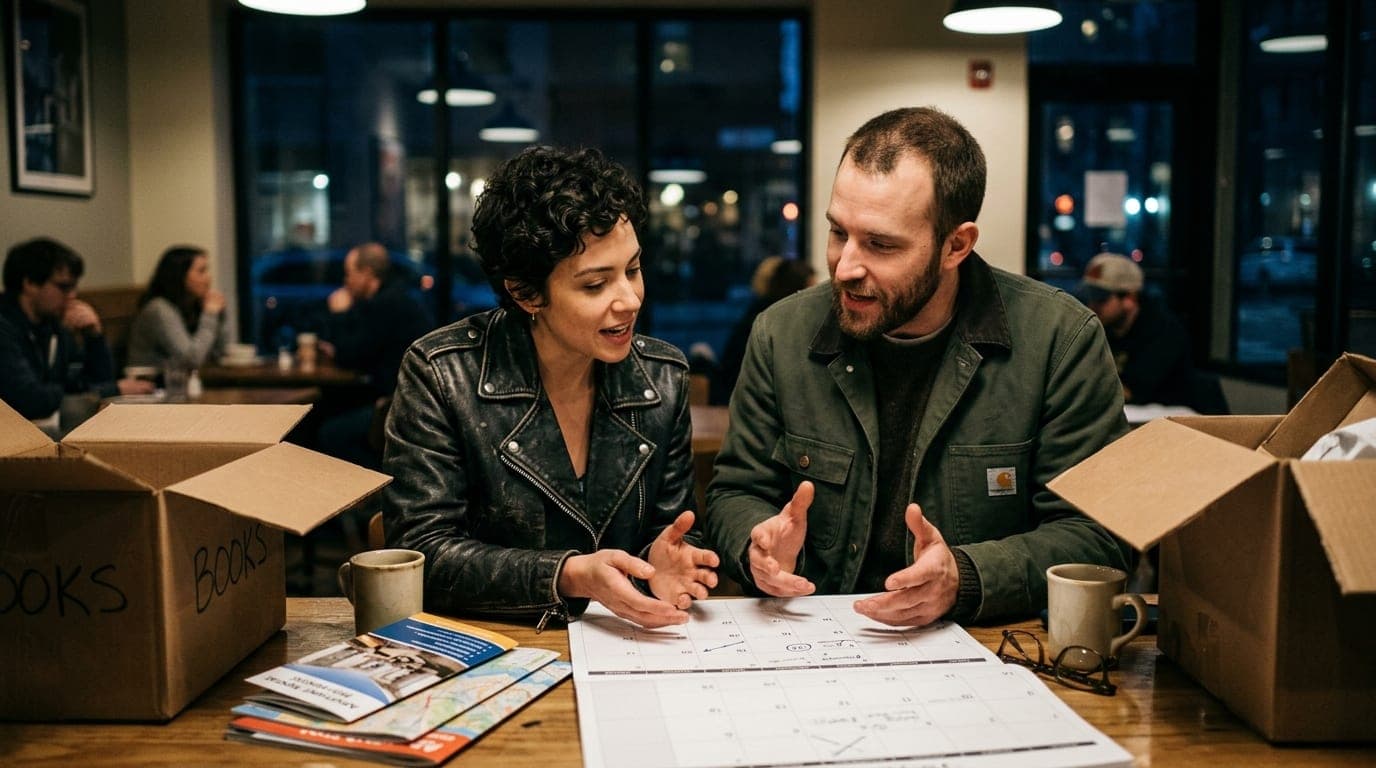
As of July 2026, the romantic landscape has been permanently altered by the total integration of professional and domestic spheres. We no longer just live with our partners; we operate adjacent to them in a state of perpetual visibility that our ancestors never had to navigate. This shift has birthed a specific tension I call the attachment-and-the-co-working-dynamic. It is the raw, unedited version of your relationship that doesn't show up on a curated dating profile. Back when you were using Set Adrift to navigate the early talking stage, you were probably looking for compatibility in music or weekend hobbies. You weren't looking for how they handle a passive-aggressive email from a middle manager while you’re trying to eat a salad three feet away. This is real life now, and it’s time we talked about the psychological cost of the shared desk.
Sponsored Content
The psychological footprint of the attachment-and-the-co-working-dynamic
The attachment-and-the-co-working-dynamic functions as a psychological mirror, reflecting our deepest insecurities about proximity and autonomy. When partners occupy the same physical workspace, their habitual responses to stress—whether seeking reassurance or retreating into isolation—are magnified, forcing a confrontation with attachment wounds that might otherwise remain dormant in a traditional nine-to-five office setting.
To understand the attachment-and-the-co-working-dynamic, we have to look at the four primary attachment styles: Secure, Anxious-Preoccupied, Dismissive-Avoidant, and Fearful-Avoidant (Disorganized). In a traditional office, these styles are tempered by distance. You miss your partner, or you enjoy your space, and you reunite in the evening. In the co-working era, that "reunion" is gone. The transition from "Colleague" to "Lover" happens in the three seconds it takes to turn your head from your monitor to the person on the couch.
For those with an anxious attachment style, the attachment-and-the-co-working-dynamic can feel like a constant quest for validation. If your partner is deep in a spreadsheet and doesn’t look up when you sigh, your brain might interpret that as emotional abandonment rather than professional focus. Conversely, the avoidant partner feels the weight of being "watched" all day. Their home, which used to be a sanctuary for decompression, has become a stage where they must perform the role of both an efficient employee and an attentive partner. This pressure often leads to a "hermiting" effect, where they withdraw further into their noise-canceling headphones, inadvertently triggering the anxious partner even more.
Statistically, the impact is measurable. Around 64% of people in 2023 reported that working from home improved their relationship overall, yet a significant 15% reported a marked increase in arguments specifically related to shared space (Pew Research, 2023). This 15% represents those struggling with the attachment-and-the-co-working-dynamic. It isn't that they don't love each other; it's that their attachment systems are constantly pinging "Danger!" because the boundaries of the self are being blurred by the presence of the other.
How attachment styles collide at the shared coffee station
Collisions in the attachment-and-the-co-working-dynamic occur when one partner’s professional persona triggers the other’s relational fears. An anxious partner might interpret a co-working spouse’s focused silence as emotional withdrawal, while an avoidant partner may feel suffocated by the constant presence of their significant other, leading to a cycle of pursuit and retreat that disrupts both productivity and intimacy.
The "Coffee Station Collision" is a classic manifestation of the attachment-and-the-co-working-dynamic. Imagine this: Partner A (Anxious) is having a rough morning. They walk to the kitchen to grab a refill, hoping for a thirty-second "micro-date"—a hug, a smile, a "you got this." Partner B (Avoidant) is also in the kitchen, but their brain is still in the Zoom meeting they just left. When Partner A leans in for a hug, Partner B stiffens or gives a perfunctory pat, their mind already on the next deadline. To Partner B, this is just "work mode." To Partner A, this is a devastating rejection.
This is where the attachment-and-the-co-working-dynamic becomes dangerous. Because you are physically there, the expectation of emotional availability is constant. We forget that our partners have different versions of themselves. In the early days of dating, perhaps during that Set Adrift phase where everything was brand new, you only saw the "dating" version. Now, you see the "stressed-about-deadlines" version, the "annoyed-with-IT" version, and the "too-tired-to-be-charming" version. Without the physical separation of a commute, these personas bleed into each other until you can no longer distinguish the partner who loves you from the professional who is currently overwhelmed.
Furthermore, the "proximity paradox" states that the closer we are to someone physically, the more we notice their minor flaws. In the context of the attachment-and-the-co-working-dynamic, these flaws aren't just personality quirks—they are perceived as personal affronts. Their loud typing becomes a sign of their aggression; their messy desk becomes a sign of their lack of respect for you. We begin to pathologize professional habits because we are viewing them through the lens of romantic attachment.
Four tactics for establishing functional boundaries
Managing the attachment-and-the-co-working-dynamic requires a deliberate shift from accidental proximity to structured interaction through the implementation of rigid physical and temporal boundaries. By treating the home office as a professional sanctuary and establishing 'on-duty' signals, couples can mitigate the risk of over-familiarity and prevent the inevitable bleed-over of workplace frustration into the sanctity of their romantic connection.
The key to surviving the attachment-and-the-co-working-dynamic is to reintroduce the concept of "the commute"—not as a physical drive, but as a psychological transition. You need to create "islands of autonomy" within your shared space. This isn't about being cold; it's about being sustainable. If you don't create space to be an individual, you will eventually resent the person who "stole" that space from you.
**The Visual Cue System:** Use a physical object—a specific lamp, a door sign, or even wearing specific "work-only" headphones—to signal when you are in a deep-focus state. When the signal is active, the other partner agrees not to initiate non-emergency conversation, respecting the professional boundary within the attachment-and-the-co-working-dynamic.
**The Scheduled Micro-Date:** Instead of hoping for spontaneous affection that might be rejected, schedule ten minutes at 12:30 PM for a "no-work-talk" lunch. This gives the anxious partner a guaranteed connection point and allows the avoidant partner to mentally prepare for emotional engagement.
**The Digital Interruption Protocol:** Stop shouting questions across the hallway. Use a messaging app (Slack, iMessage) to ask, "Do you have a second?" Even if you are in the next room, this respects the other person's mental workspace and reduces the "startle response" that can trigger attachment-related irritability.
**The "Third Space" Ritual:** At the end of the workday, perform a shared ritual that signals the death of the "co-worker" persona and the birth of the "partner" persona. This could be a 15-minute walk, changing clothes, or even just putting the laptops in a drawer. This is crucial for resetting the attachment-and-the-co-working-dynamic back to a romantic frequency.
By implementing these tactics, you acknowledge that love alone isn't enough to sustain a 24/7 shared environment. You need a framework. You need to protect the "us" by first protecting the "me" that exists in the professional sphere. Without these boundaries, the attachment-and-the-co-working-dynamic will eventually consume the romance, leaving behind two roommates who are too tired to even like each other.
Comparing workspace configurations and their impact
The physical configuration of your workspace serves as the infrastructure for the attachment-and-the-co-working-dynamic, either facilitating healthy separation or fostering toxic codependency. Comparing different setups reveals that while shared desks offer high levels of visibility, they often lack the necessary psychological 'air' required for avoidant or secure types to maintain their individual identities throughout the demanding workday.
Your environment dictates your behavior. If you are struggling with the attachment-and-the-co-working-dynamic, it might not be a "communication issue"—it might be a "floor plan issue." We often try to solve architectural problems with therapy, when we really just need another door. Below is a breakdown of how different setups interact with relationship health.
Pattern
Healthy version
Red flag version
**The Shared "Partner" Desk**
Mutual support, quick jokes, shared playlists, and a feeling of being a "team" against the world.
Monitoring the other's screen, judging their productivity, and resenting their "work voice" or phone calls.
**Separate Rooms/Closed Doors**
Total focus, preserved mystery, and a genuine "reunion" feeling at the end of the day or during breaks.
Using the door as a weapon to shut the other out during arguments; feeling isolated and "roommate-ified."
**The Hybrid (One in Office, One at Home)**
Balanced autonomy; the "work-from-home" partner maintains the domestic sanctuary while the other brings external energy home.
Envy from the "office" partner regarding the other's flexibility; feeling like "passing ships" with no shared routine.
As you can see, the attachment-and-the-co-working-dynamic is highly sensitive to physical space. If you have an anxious attachment style, the "Separate Rooms" configuration might initially feel scary, but it is often the healthiest option because it prevents you from over-monitoring your partner’s every move. If you are avoidant, the "Shared Desk" is likely your version of hell, and forcing it will only lead to an inevitable explosion of "need for space" that could damage the relationship's foundation.
When the co-working dynamic becomes a relationship dealbreaker
Recognizing when the attachment-and-the-co-working-dynamic has become a dealbreaker involves assessing whether the relationship can survive the loss of mystery and the gain of constant scrutiny. If the shared workspace environment consistently breeds resentment, contempt, or a total loss of sexual attraction that persists outside of working hours, the arrangement may be fundamentally incompatible with a healthy partnership.
There is a specific kind of "erotic death" that happens within a poorly managed attachment-and-the-co-working-dynamic. Esther Perel often talks about how desire requires space—the ability to look at your partner from a distance and see them as a separate, capable individual. When you spend eight hours a day watching them struggle with a printer or grovel to their boss on a conference call, that distance evaporates. You aren't seeing the person you swiped right on during the Set Adrift days; you’re seeing a person whose humanity is being ground down by corporate labor. For some, this fosters a deep, maternal/paternal empathy. For others, it kills the "spark" entirely.
If you find that your "work" arguments are bleeding into your "bedroom" life, take it seriously. About 25% of the population identifies with an avoidant attachment style (Match.com, 2022), and for these individuals, the constant proximity of the attachment-and-the-co-working-dynamic can feel like a slow-motion claustrophobia. If you have tried the boundaries, tried the separate rooms, and you still feel a sense of relief when they leave the house for an hour, it might be time to admit that your relationship requires more "air" than your current lifestyle allows.
The greatest threat to modern love isn't infidelity or lack of passion; it's the slow, quiet erosion of the individual self by the relentless, 24/7 visibility of the shared home office.
In the end, the attachment-and-the-co-working-dynamic is a tool. It can be used to build a fortress of mutual support, or it can be a wrecking ball that smashes the delicate boundaries required for romance. As of July 2026, the choice is yours. You can continue to drift through the day-to-day friction, or you can start treating your shared workspace with the same intentionality you brought to your very first date. Respect the work, but protect the love. They are not the same thing, and they never should be.
How attachment styles collide at the shared coffee station
Comparing workspace configurations and their impact