When Your Heart is Here but Your Lease is There: Attachment in the Age of Situational Relocation
PillowTalk Daily Editorial9 min read
Sponsored Content
Sponsored Content
Frequently Asked Questions
Situational relocation refers to the frequent, often work-related or economically-driven moves that individuals make in the modern economy. Unlike traditional moves for marriage or family, these are often temporary or career-motivated. In dating, it creates a 'ticking clock' dynamic where partners must decide if their connection is strong enough to withstand geographic separation or a joint move early in the relationship.
If you find yourself becoming uncharacteristically clingy, constantly checking your partner's location, or conversely, suddenly feeling numb and wanting to break up before they move, your attachment style is likely being triggered. Situational relocation disrupts our sense of 'permanence,' which can cause anxious-preoccupied or dismissive-avoidant behaviors to flare up as a defense mechanism against potential abandonment or loss of independence.
Yes, but it requires 'temporal integrity.' This means being 100% present in the time you have, while being 100% honest about your future plans. You can have a deeply meaningful three-month relationship if both parties are aware of the timeline. The damage occurs when one person hides their intent to move, creating a 'false' attachment built on a foundation of logistical secrecy.
This should be a collaborative 'values' conversation, not just a financial one. While the higher salary often wins by default, you must also consider 'social capital'—who has the stronger support system in the current city? A healthy approach involves the 'Lead-Follow' rotation, where partners agree that 'this time we move for your job, next time we move for mine,' ensuring long-term equity.
If you are relocating within 30 days, using 'Travel Mode' on apps like Bumble or Hinge is actually a great way to build a social or romantic bridge. However, you must be transparent in your bio. Mentioning that you are 'moving to [City] on [Date]' prevents the 'Set Adrift' confusion and attracts people who are either looking for something fresh or are willing to wait a few weeks to meet.
As of June 2026, the traditional map of love has been folded, tucked into a suitcase, and sent to a mid-sized tech hub with better tax incentives. We are living in a time where "where are we?" is a question of both relationship status and physical coordinates. The reality of modern work and the lingering effects of the global reshuffle have made situational relocation a standard feature of our twenties and thirties, rather than a rare glitch. We’re falling in love on Hinge in one city, only to find ourselves moving for a promotion, a lower cost of living, or a "digital nomad" visa six months later. This isn't just about long-distance dating; it’s about a fundamental shift in how we bond when the ground beneath us is constantly shifting. Attachment in the age of situational relocation demands a level of honesty that most of us weren't taught to handle, but it’s the only way to keep from sinking when the tide of life pulls you toward a new zip code.
Sponsored Content
The Psychological Cost of Attachment in the Age of Situational Relocation
Forming a secure bond requires a predictable environment, but situational relocation introduces "intermittent stability," which can trigger anxious attachment even in the most secure individuals. When your partner's presence is tied to a temporary contract or a fleeting lease, the brain struggles to categorize the relationship as a long-term safety net, often leading to emotional withdrawal or hyper-vigilance.
Attachment theory traditionally relies on the concept of a "secure base"—a person who provides a consistent, reliable presence. However, as of June 2026, the secure base is increasingly portable. We are seeing a rise in "compressed intimacy," where couples accelerate their emotional milestones because they know their time in the same city is limited. While this can lead to intense, meaningful connections, it also places immense pressure on the relationship to "prove its worth" before the next relocation occurs. According to Match.com, 53% of singles are open to a long-distance relationship if they feel a strong connection, suggesting that we are becoming more adaptable, even if the psychological toll remains high (Match.com, 2023). This adaptability is necessary because the alternative is a perpetual state of "Set Adrift" in the talking stage, where connections are abandoned the moment a LinkedIn notification suggests a move to Austin or Berlin. We are essentially relearning how to trust someone’s "staying power" even when they aren't physically staying.
The friction arises when one partner views the relocation as a temporary hurdle while the other sees it as a fundamental change in the relationship's "contract." In the age of situational relocation, we often find ourselves grieving a version of a relationship that never had the chance to exist in a stable environment. This "anticipatory grief" can lead to a phenomenon known as "pre-emptive distancing," where a partner begins to pull away emotionally weeks or even months before the actual move occurs. They are trying to soften the blow of the eventual physical separation, but in doing so, they sabotage the remaining time they have together. To combat this, couples must move toward "radical presence"—the ability to invest fully in the current moment without the guarantee of a shared geographic future. It’s a difficult tightrope to walk, requiring a high degree of emotional maturity and a willingness to be vulnerable without a safety net.
Navigating the Talking Stage While Being Set Adrift
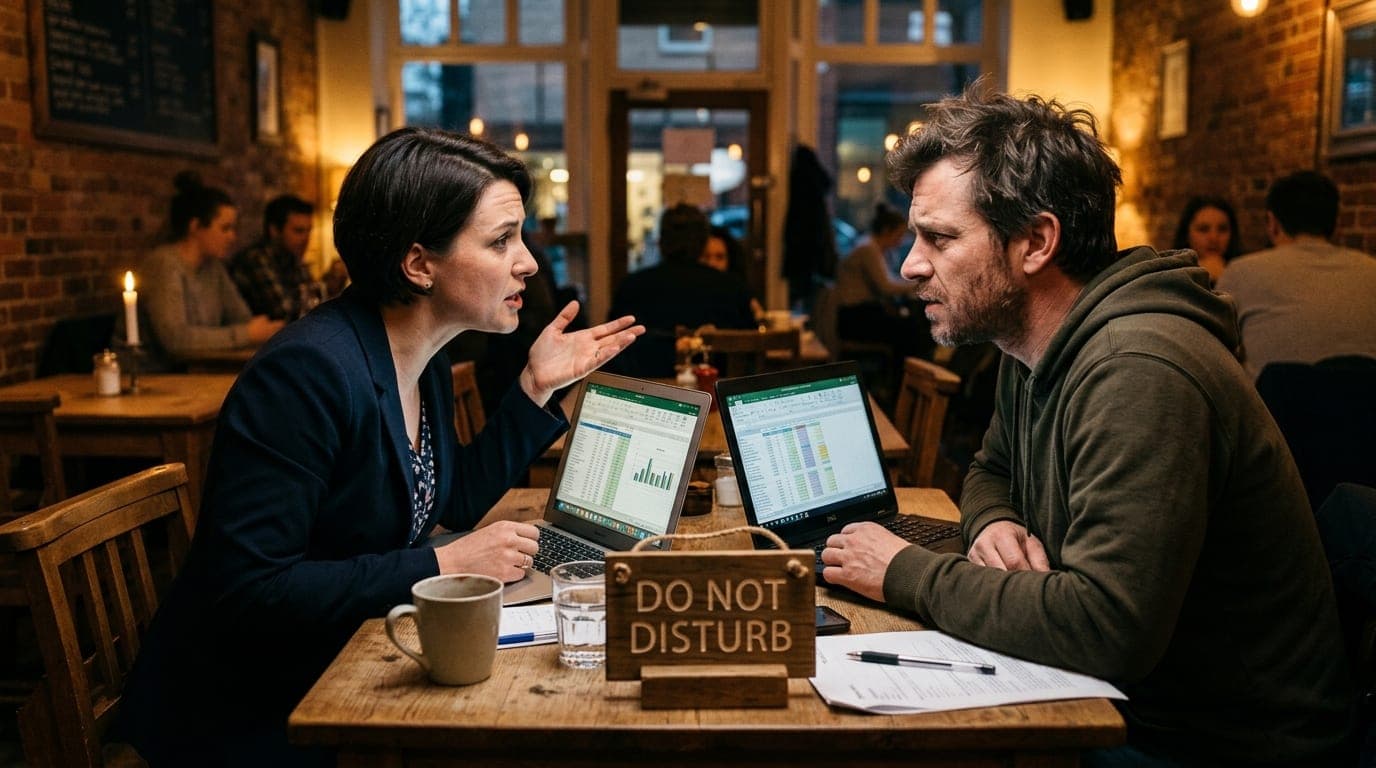
The "talking stage" has become an extended negotiation of future geography, where early-stage dating involves vetting a partner’s mobility as much as their personality or values. To manage attachment in the age of situational relocation, daters must balance the excitement of a new spark with the sobering reality of their respective five-year plans to avoid avoidable heartbreak.
In the current dating landscape, many find themselves "Set Adrift" during the initial phases of connection. You meet someone on Bumble or Hinge, the chemistry is undeniable, but there’s a looming expiration date on your proximity. This is where the "Set Adrift" phenomenon is most dangerous; it’s the feeling of being unanchored, where you’re afraid to let your guard down because the logistics don't align. We’ve moved past the era where you’d date for a year before discussing a move. Now, that conversation often happens by the third date. It’s no longer seen as "too much, too soon"—it’s seen as necessary due diligence. If you’re a digital nomad and they’re a school teacher with a tenured position, the attachment-in-the-age-of-situational-relocation dynamic will hit you harder and faster than it would a couple with similar levels of mobility.
The key to navigating this is "logistical transparency." It’s about being upfront about your "anchors" (what keeps you in a place) and your "sails" (what might make you leave). For example, if you know your company is eyeing a merger that might send you to the West Coast, that’s a piece of information that belongs in the talking stage, not six months deep into a relationship. We are seeing a shift where apps like eHarmony are being used more for their deep compatibility testing specifically because people want to know if a person is "move-worthy" before they get attached. If the core values and personality traits align perfectly, the relocation becomes a problem to be solved together rather than a reason to break up. Without that foundation, the relocation simply becomes the easiest exit ramp.
Practical Strategies for Attachment in the Age of Situational Relocation
Maintaining a healthy bond during a move requires shifting focus from "proximity-based intimacy" to "intentional connectivity," where shared rituals and digital transparency replace the casual ease of physical presence. Successful couples treat the relocation as a collaborative project, ensuring that both partners feel heard and that the power dynamic remains balanced during the transition.
The 90-Day Logistics Audit: Every three months, sit down and discuss your current professional and personal trajectory. In the age of situational relocation, things change fast. Is a move on the horizon? Has your desire to stay in this city shifted? This prevents "geographic blindsiding," where one partner suddenly announces a move the other wasn't prepared for.
Creating "Digital Anchors": When physical presence isn't possible, you need rituals that aren't just FaceTime calls. This might be a shared digital journal, a synchronized movie night, or even playing the same video game. These activities build a "shared world" that exists independently of your physical location, strengthening attachment in the age of situational relocation.
The "Lead-Follow" Rotation: If relocation is a recurring theme in your relationship (common in military, tech, or academic circles), discuss whose career or needs take priority for the next "turn." This prevents one partner from feeling like a perpetual "trailing spouse," which is a major driver of resentment and attachment rupture.
The Pre-Move "Values Re-Alignment": Before a move happens, revisit why you are together. Is it the convenience of the city you’re in, or is it the person? If the relocation feels like it’s stripping away the "fun" parts of the relationship, it’s a sign that the attachment was built more on situational convenience than deep-seated compatibility.
These tactics aren't just about survival; they’re about building a relationship that is "location-agnostic." In the past, the location was the container for the relationship. Today, the relationship must be the container for the location. This requires a level of intentionality that previous generations didn't have to exercise. You have to choose each other every day, not just because you’re both in the same room, but because you both want to be in the same future. Attachment in the age of situational relocation isn't impossible; it’s just more demanding. It forces you to look at the person across from you and ask, "Is this person worth the friction of a move?" If the answer isn't a resounding yes, the relocation often acts as a natural filter, ending relationships that were never meant to go the distance anyway.
Comparing Connection Styles in the Age of Situational Relocation
How we handle attachment in the age of situational relocation depends heavily on our inherent connection styles, which can be categorized by how we prioritize geographic stability versus relational depth. Understanding whether you are a "nester," a "roamer," or a "hybrid" can help you identify potential points of friction before a move becomes a crisis.
Pattern
Healthy Version
Red Flag Version
The Geographic Pivot
Discussing a move as a "we" problem and exploring remote work or career shifts together.
Making a unilateral decision to move and expecting the partner to "deal with it" or follow blindly.
Intimacy Timing
Being honest about a planned departure early on, allowing the partner to choose their level of investment.
"Love-bombing" someone while hiding an upcoming relocation to secure short-term companionship.
Conflict Resolution
Addressing the stress of moving directly and acknowledging the emotional toll of the transition.
Using the stress of a move as an excuse to shut down or treat the partner as a logistical burden.
Future Planning
Creating a roadmap with clear milestones for when the couple will be in the same location again.
Refusing to commit to a date or a plan, leaving the other partner in a permanent state of "waiting."
As you can see, the difference between a healthy transition and a relationship-ending one often comes down to the inclusion of the partner in the decision-making process. Attachment in the age of situational relocation is fragile because it feels conditional. If a partner feels like they are secondary to a job or a city, the secure bond begins to fray. A "healthy" version of this dynamic involves high levels of empathy for the partner who may be sacrificing their local community to maintain the relationship. It also requires the partner who is relocating to recognize that they are asking for a significant emotional "loan" from their significant other. This debt is paid back through increased emotional availability and a commitment to building a new "home" together, regardless of where the moving truck ends up.
Knowing When to Fold Your Tent in the Age of Situational Relocation
Recognizing when to walk away from a relationship during a relocation is crucial, as the physical distance often highlights existing emotional gaps that were previously masked by convenience and shared activities. If the thought of a move feels like an escape rather than a hurdle to overcome together, it is a clear indication that the attachment-in-the-age-of-situational-relocation has reached its natural conclusion.
Sometimes, a relocation is the best thing that can happen to a mediocre relationship—it provides the clarity needed to end things. If you find yourself unwilling to make even small sacrifices to bridge the gap, or if you feel a sense of relief at the prospect of being in a different city, listen to that. According to a 2024 Statista report, 35% of remote workers relocated recently, and many cited "lifestyle improvement" as a primary driver (Statista, 2024). If your partner doesn't fit into that improved lifestyle, it’s better to be honest now than to drag out a long-distance connection that is destined to fail. Attachment in the age of situational relocation requires a "hell yes" from both sides; anything else is just a prolonged goodbye.
"A move shouldn't be the end of a relationship, but it is often the end of a fantasy. Real love can survive a change in zip code, but it can't survive a change in heart that the zip code merely revealed."
In the end, we have to stop viewing relocation as a threat to intimacy and start seeing it as a test of it. The strongest bonds aren't those that never move; they’re the ones that have been packed, shipped, and unpacked in three different cities and still feel like home. If you're feeling Set Adrift, remember that an anchor isn't a place—it’s a person. But if that person is unwilling to drop anchor with you, it might be time to let the current take you somewhere new.
Navigating the Talking Stage While Being Set Adrift
Comparing Connection Styles in the Age of Situational Relocation