Beyond the Swipe: How Modern Dating Flattened Romance and What We’re Doing to Reclaim It
PillowTalk Daily Editorial11 min read
Sponsored Content
Sponsored Content
Frequently Asked Questions
Dating app exhaustion stems from decision fatigue, performative texting, and the commodification of connections. Stripping away physical context forces users into repetitive text interviews, creating an administrative burden that erodes spontaneous attraction.
Yes. Many singles are rebuilding real-world connections through third places, hobby groups, run clubs, mutual friend networks, and community events. These environments offer ambient context, letting compatibility develop naturally over time.
Ideally within 3 to 5 days of consistent messaging. Prolonged texting creates false parasocial intimacy and idealization, making the eventual real-world meet more anxious and prone to disappointment.
Ambient connection refers to meeting someone naturally in a shared environment—like a gym, workplace, or interest group—where you observe their character, tone, and real-world behavior before making a deliberate romantic evaluation.
Limit the time spent texting before meeting, replace static sit-down drinks with dynamic activity dates, and use apps purely as a discovery tool rather than a space to build premature emotional intimacy.
As of August 2026, the promise of algorithmic match-making has reached a paradoxical crossroads. We were promised infinite option value, precise filter criteria, and a frictionless path to romantic bliss. Instead, modern singles find themselves trapped inside a standardized pipeline where every human being is compressed into six curated photos, three witty prompts, and an endless loop of low-stakes text exchanges. Whether dating apps have flattened how people meet into a single template, what gets lost when every introduction starts the same way, and what people are doing instead is no longer just a late-night talk show punchline—it is the defining relationship crisis of our decade.
When you look at the landscape across major platforms like Hinge, Bumble, Tinder, and eHarmony, the mechanic is universally identical. You swipe right, you pair up, you initiate a polite "How was your weekend?" script, and you negotiate a date that feels suspiciously like a job interview over an overpriced cocktail. The spontaneity, the ambient spark of eye contact across a crowded room, and the organic slow-burn of shared history have been replaced by a homogenized routine. At PillowTalk Daily, we talk to thousands of readers who are utterly exhausted not by romance itself, but by the relentless administrative labor of digital courtship.
To understand why dating feels so strangely sterile today, we have to look beneath the sleek user interfaces and examine what happens to human psychology when every romantic encounter begins through the exact same digital doorway.
Sponsored Content
How Dating Apps Flattened Modern Romantic Introductions Into a Single Template
Dating apps have flattened how people meet into a single template by standardizing romance into curated photos, brief prompts, and asynchronous text banter. This setup strips away body language, tone, and shared physical environments, forcing every potential connection through an identical digital funnel before human chemistry can even be tested.
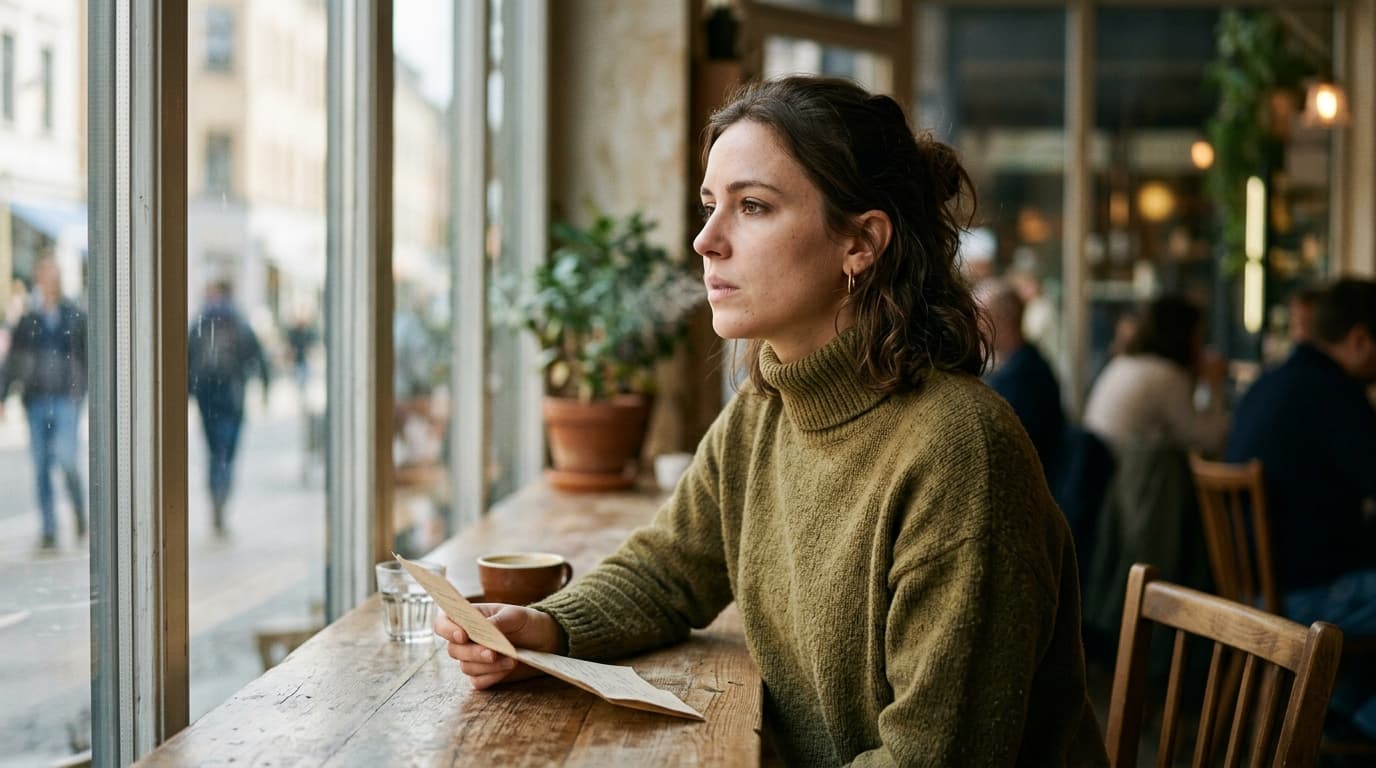
For generations, human beings met through what sociologists call ambient context. You met at a mutual friend’s chaotic birthday party, during an excruciatingly long shift at a coffee shop, through a neighborhood run club, or while arguing over a textbook in a library aisle. In those environments, you observed someone before you evaluated them. You saw how they interacted with strangers, how they laughed at bad jokes, how they moved through space, and how their voice sounded when they were relaxed. You gathered hundreds of subtle sensory cues long before you ever considered whether they met a strict checklist of demographic dealbreakers.
When platforms like Match, Tinder, and Hinge revolutionized the space, they replaced this ambient richness with a hyper-efficient digital catalog. According to recent survey data, 30% of American adults—and over 50% of adults under age 30—have used an online dating platform (Pew Research, 2023). While this created unprecedented reach, it also established a rigid, monocultural funnel. Every single match now follows the same rigid lifecycle:
1. **The Resume Assessment:** Swiping through a highlight reel designed to market an idealized personal brand.
2. **The Asynchronous Interview:** Exchanging text messages that balance low-investment banter with silent evaluations of spelling, response times, and pop-culture alignment.
3. **The Scripted First Meet:** Sitting across a table from a stranger who looks 70% like their photos, attempting to bridge the massive gap between their digital persona and their real-world presence.
This standardization flattens human nuance. When whether dating apps have flattened how people meet into a single template, what gets lost when every introduction starts the same way, and what people are doing instead becomes evident, we see that the app environment flattens subjective human warmth into objective, filterable criteria. Height, income bracket, political affiliation, and aesthetic taste become hard barriers, while humor, warmth, resilience, and emotional presence—the actual foundation of long-term compatibility—are invisible on a high-definition phone screen.
Furthermore, algorithms are designed to maximize engagement with the software, not necessarily to clear your schedule for a happy marriage. By encouraging perpetual browsing, platforms train us to treat people like open tabs in a browser. If a date exhibits a minor awkward silence or mentions an unfamiliar hobby, the app-trained brain doesn't think, "Let me explore this unique person." It thinks, "I have fourteen other matches waiting in my inbox; let me close this tab and open the next."
What Gets Lost When Every Romance Starts With the Same Digital Interview
When every introduction starts the same way, couples lose the organic friction, ambient discovery, and situational context that historically built genuine attraction. Instead of observing someone in their natural element, users conduct transactional text interviews, elevating superficial dealbreakers while filtering out the nuanced, unscripted moments where real compatibility takes root.
The most damaging side effect of this flattened template is the elimination of context. In a natural environment, context does the heavy lifting of building baseline rapport. When you meet someone through mutual friends or a shared activity, you enter the interaction with built-in social proof and shared ground. You don't need to ask "What do you do for fun?" because you are actively having fun in the same physical environment.
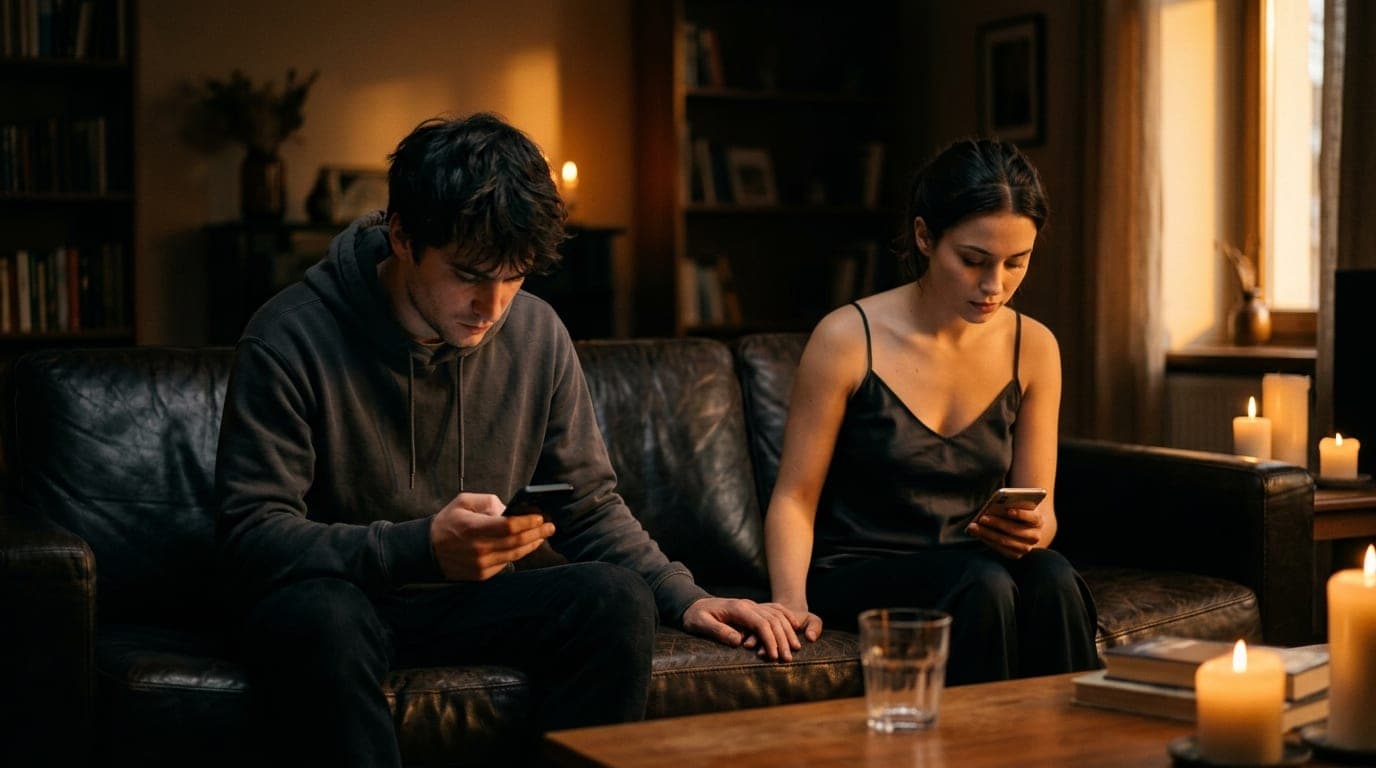
When every introduction is stripped of context, users fall into the dreaded "talking stage." This ambiguous, anxiety-inducing limbo can drag on for weeks without ever producing a single moment of real intimacy. Couples become *Set Adrift* in a sea of performative text messages, endlessly exchanging good morning texts, surface-level check-ins, and meme references. They are floating without an anchor, building complex parasocial fantasies about who the other person might be, only for those fantasies to collapse the second they hear the person's real voice or notice how they treat a waiter.
Consider the sensory data that gets erased in a pure text-and-photo setup:
* **Micro-expressions and Vocal Cadence:** A self-deprecating joke sounds charming when spoken with warmth and eye contact, but can read as toxic or insecure when flattened into a plain text message.
* **Somatic Chemistry:** Physical attraction is not merely visual; it is nervous-system deep. Smell, posture, touch, and energy play massive roles in whether your body feels safe and excited around someone else.
* **Observational Dynamics:** How a person handles an unexpected delay, how they interact with their environment, and how they navigate mild stress tell you far more about their character than any curated profile prompt ever could.
When whether dating apps have flattened how people meet into a single template, what gets lost when every introduction starts the same way, and what people are doing instead is examined through this lens, the structural deficit of the digital interview becomes glaringly clear. We are attempting to form deep emotional bonds using tools that were explicitly engineered for rapid micro-content consumption.
Research shows that the friction inherent in app messaging often creates false intimacy or premature disillusionment. In fact, roughly 46% of dating app users report feeling frustrated by the shallow nature of the connections they forge online (Statista, 2024). When every date feels like an audition, people protect themselves by wearing armor. They bring their polished, professional "front-stage" self to the date, which guarantees that neither person gets to see the raw, authentic individual underneath.
Reclaiming Organic Connection: How to Break Free From the App Template
Breaking free from the standardized dating template requires moving from passive digital screening to active, real-world engagement. By prioritizing immediate low-pressure meetings, joining interest-based communities, setting boundary timeframes on app messaging, and embracing ambient social environments, singles can cultivate authentic chemistry grounded in real-life context rather than text-based projection.
If you are exhausted by the cycle of swiping, interviewing, and ghosting, you do not have to abandon romantic hope entirely. A growing movement of singles is radically altering how they approach dating—either by changing how they use platforms like Hinge and Bumble, or by bypassing them altogether in favor of real-world discovery.
Here are four actionable tactics to shatter the flattened template and restore texture to your dating life:
Enforce the "Five-Message Rule" for Real Meets: Stop allowing matches to turn into endless text pen-pals. Use the app strictly as an initial safety check and routing protocol. After four or five back-and-forth exchanges, propose a low-stakes, short-duration in-person meeting (like a 30-minute coffee or an afternoon walk). If the connection isn't real, you have saved weeks of emotional energy; if it is, you skip the performative talking stage entirely.
Pivot to Context-Rich "Third Places": Reclaim spaces that are neither home nor work—climbing gyms, volunteer groups, board game cafes, language exchanges, or local run clubs. The goal here is not to hunt aggressively for a partner, but to place yourself in consistent, recurring ambient environments where social interactions happen naturally and repeatedly over time.
Shift from "Interview Dates" to "Activity Outings": If you do meet someone via an app, ban the standard face-to-face sit-down drink date. Plan dates around an activity where your bodies are moving and your eyes are looking at a shared focus—visiting a farmer's market, playing ping-pong, walking through a museum, or attending an estate sale. Side-by-side interaction dramatically reduces performance anxiety and yields truer glimpses of character.
Declare a Digital Fast and Cultivate "Passive Openness": Take a 30-day break from deleting and re-downloading apps. During those 30 days, practice physical presence when you are out in public. Take out your earbuds, put your phone in your pocket while waiting in lines, make casual eye contact, and offer simple, warm observations to people around you. You train your social muscles to recognize opportunities for real-world serendipity.
By putting these practices into action, you wrest control back from the algorithms. You stop waiting for a pre-filtered human to appear on a glass screen and start building the real-world magnetism that naturally attracts compatible partners.
Comparing Modern Meeting Patterns: App Funnels vs. Ambient Introductions
Comparing app-based matching against ambient real-world introductions reveals stark differences in emotional investment, friction, and authenticity. While digital funnels offer volume and convenience at the expense of depth, real-world encounters leverage natural social context, reducing projection and building immediate, multi-sensory baseline trust between potential partners.
To see how whether dating apps have flattened how people meet into a single template, what gets lost when every introduction starts the same way, and what people are doing instead plays out in practice, it helps to examine the functional contrast between traditional app dynamics and healthy ambient dynamics. The table below outlines how common romantic patterns manifest across both models:
Pattern / Stage
App-Funnel Version (Template)
Ambient / Organic Version (Healthy)
Red Flag Warning Sign
Initial Discovery
Evaluating 2D photos, static prompts, and curated statistics in isolation.
Observing someone in a shared space, reacting to their live movement, tone, and humor.
Fixating exclusively on ideal profile metrics while ignoring awkward, real-world coldness.
The Talking Stage
Weeks of asynchronous texting, performative check-ins, and dynamic projections. Feeling Set Adrift in texting loops.
Brief logistical planning followed by immediate face-to-face interaction or shared group activities.
Endless text flirtation with repeated excuses to delay meeting in the real world.
First Impression
High-pressure sit-down date feeling like an interview; hyper-fixation on small flaws.
Low-stakes side-by-side interaction with built-in activity and natural environmental conversation.
Feeling performative, exhausted, or like you are playing a tailored character to win approval.
Conflict / Misstep
Immediate unmatched action or ghosting due to the illusion of infinite alternative choices.
Direct conversation, grounded context, and mutual effort to clarify misunderstandings.
Discarding connections over minor text-tone misinterpretations without a live voice check.
When you look at this table, the takeaway isn't that apps are inherently evil or that old-fashioned meeting methods were entirely flawless. The key takeaway is balance. Apps were designed as a directory, but we turned them into the entire venue. When you treat the app as the entire romance—relying on text messages to generate emotional safety that can only be built in person—you guarantee frustration.
Whether you use Bumble to make initial contact, rely on eHarmony for targeted long-term intent, or meet someone while browsing a local bookstore, the target outcome remains identical: stepping out from behind the screen and stepping into authentic human vulnerability.
When to Walk Away From the Script and Trust Your Offline Instincts
Recognizing when a digital interaction has exhausted its usefulness requires tracking emotional fatigue, circular texting, and performative messaging. When an app exchange feels like a chore, walking away from the keyboard to pursue in-person clarity preserves your energy and prevents the cynicism that keeps modern singles perpetually disconnected.
One of the greatest dangers of living inside the flattened template is that it dulls your natural romantic instincts. You begin to question your own feelings. You wonder why you don't feel "butterflies" for a profile that checks every single one of your written logical boxes, or why you feel drawn to someone whose prompt answers were brief or unimpressive.
You have to grant yourself permission to step away from the script. If you have been texting someone for five days and the thought of replying to their next text fills you with a heavy sense of administrative dread, stop pushing through it. That dread is not an indicator that you are broken or incapable of love; it is your brain telling you that you have reached the limit of digital abstraction.
Pay attention to these clear signals that it is time to walk away from the digital interview and reset your approach:
* **The Text-Loop Trap:** You have exchanged over 50 messages, but every time you suggest grabbing a quick coffee, the other person demurs, pivots, or brings up a busy work schedule without offering an alternative date.
* **The Profile Fantasy:** You find yourself falling deeply in love with an idealized idea of who this person is based on their music taste and witty banter, despite having never spent ten consecutive minutes with them in person.
* **The Fatigue Wall:** You open Hinge or Tinder and feel an immediate sense of bodily exhaustion, apathy, or cynicism before you even look at a single profile.
When you hit these walls, the solution is never to swipe harder or lower your human standards. The solution is to disconnect from the machine and reconnect with the physical world. Walk down to your local cafe without your phone. Join a recreational sports league where people laugh and sweat and drop the ball. Host an informal dinner party and tell your friends to bring one guest you've never met. Relearn the forgotten art of being a human being among human beings.
The modern dating app is a fantastic phone book, but an atrocious romantic setting. Real chemistry isn't found by filtering through human features—it is created in the unpredictable, messy, ambient space between two people living in the real world.
Ultimately, whether dating apps have flattened how people meet into a single template, what gets lost when every introduction starts the same way, and what people are doing instead comes down to individual agency. The apps provided the pipeline, but we choose whether to live inside it. By demanding texture, enforcing real-world boundaries, and honoring the organic ambiguity of genuine human connection, you can step out of the monoculture and build a romantic life that feels rich, unpredictable, and deeply alive.