The Digital Third Wheel: Why Your Online Crushes Are Crowding Your Bed
PillowTalk Daily Editorial9 min read
Sponsored Content
Sponsored Content
Frequently Asked Questions
A parasocial relationship is a one-sided emotional bond where an individual invests time, energy, and interest in a media persona (like a YouTuber, streamer, or celebrity) who is unaware of the individual's existence. In the modern dating context, these can become 'digital third wheels' that compete with real-life partners for time and emotional intimacy.
Check for signs of 'comparison fatigue.' If you find yourself judging your date's flaws against a creator's edited persona, or if you feel a sense of 'betrayal' when a creator changes their content, you're likely too deep. If your screen time with creators is higher than your face-to-face time with a partner, it’s impacting your dating health.
Yes, they can offer community, inspiration, and entertainment. They become unhealthy when they serve as a 'safe' replacement for real-world vulnerability or when they create impossible standards for partners. The key is maintaining a clear distinction between the curated brand of a creator and the raw humanity of a real-life romantic partner.
While not traditional infidelity, it can become 'emotional siphoning.' If you are hiding your financial or emotional investment in a creator from your partner, or if you are using that digital bond to avoid intimacy with your real-life partner, you are crossing a boundary that can be just as damaging as physical cheating.
Approach the conversation with empathy, not judgment. Focus on how their behavior makes you feel—use 'I' statements like 'I feel lonely when you watch streams during our dinner time.' Suggest a 'digital detox' together and prioritize activities that require active engagement, helping them remember the unique value of physical, reciprocated presence.
Let’s be honest: we’re all a little obsessed with someone who doesn’t know we exist. Whether it’s a Twitch streamer who feels like your best friend or a TikTok creator whose morning routine you know better than your own mother’s, these one-sided bonds are no longer just "fan behavior." As of August 2026, they have become a structural part of our romantic architecture. We are living in an era where the digital ghost of a stranger often has more influence over our standards, moods, and bedtime conversations than the person actually sitting across the dinner table from us.
The problem isn't the admiration itself; it’s the way these "parasocial" ties act as a buffer against the messiness of real human beings. Real people have bad breath, they forget to text back, and they don't have a ring light to soften their flaws. When we spend six hours a day immersed in the life of someone who is paid to be charismatic, empathetic, and "present" for us through a screen, the-impact-of-parasocial-relationships-on-dating becomes a silent killer of chemistry. We start looking for a highlight reel in a world of raw footage, and that’s a game no real partner can ever win.
Sponsored Content
The Psychological Blueprint: How One-Sided Bonds Warp Our Needs
The impact of parasocial relationships on dating shifts our psychological baseline from mutual effort to passive consumption. We begin to crave the "effortless" intimacy provided by creators, which lacks the conflict and compromise of real-life partnerships. This creates a deficit in our emotional resilience, making us more likely to quit on real dates when they require actual work or communication.
At its core, a parasocial relationship is a safe haven. You get all the dopamine of a "connection" without the risk of rejection. If your favorite streamer says something you don't like, you can just close the tab. You can't "close the tab" on a partner who is expressing a genuine grievance. This lack of friction is addictive. According to recent data, 15% of Gen Z users admit to feeling "closer" to their favorite content creators than to their actual neighbors or acquaintances (YouGov, 2024). When this mindset bleeds into the dating world, it creates a "perfection wall." We stop seeing potential partners as humans and start seeing them as failed versions of the digital idols we’ve internalized. This is particularly prevalent on high-pressure apps like eHarmony or Match, where the search for a "soulmate" is already fraught with high expectations that digital personas only serve to inflate.
This dynamic often leads to what psychologists call "comparison fatigue." You’re not just comparing your date to your ex anymore; you’re comparing them to a professional entertainer who has a team of editors making them look like the perfect listener. In the "talking stage," where tools like Set Adrift are often used to bridge the gap between digital and physical connection, the presence of a parasocial crush can act as an emotional anchor, holding you back from fully committing to the discovery of a new, real-life person. You’re physically on the date, but mentally, you’re wondering what your favorite creator thinks about the new movie you just saw together.
The Comparison Trap: Why Your Partner Can’t Compete with a Stream
The impact of parasocial relationships on dating manifests most clearly as a "perfection tax" on real-world partners. Because digital creators only show their most charming, vulnerable, and curated moments, we develop an unrealistic standard for "authenticity." We begin to view our partners' normal human inconsistencies as character flaws rather than the natural byproduct of being an unedited human being.
In the current dating landscape, 45% of users report finding dating apps like Hinge or Bumble "frustrating" or "overwhelming" (Pew Research, 2023). Part of this frustration stems from the fact that we are constantly bombarded with "perfect" relationship content. We see "Day in the Life" videos of couples who never seem to fight, or influencers who offer "perfect" advice that doesn't account for the nuance of real-world stress. When you are deeply invested in these narratives, your real-life relationship feels "less than." You might find yourself judging your partner’s physical appearance or their stamina in bed, perhaps even turning to tools like Bathmate to address perceived physical shortcomings that are often just reflections of digital body-image anxieties. We are measuring our messy, beautiful, complicated lives against a polished, profitable fiction.
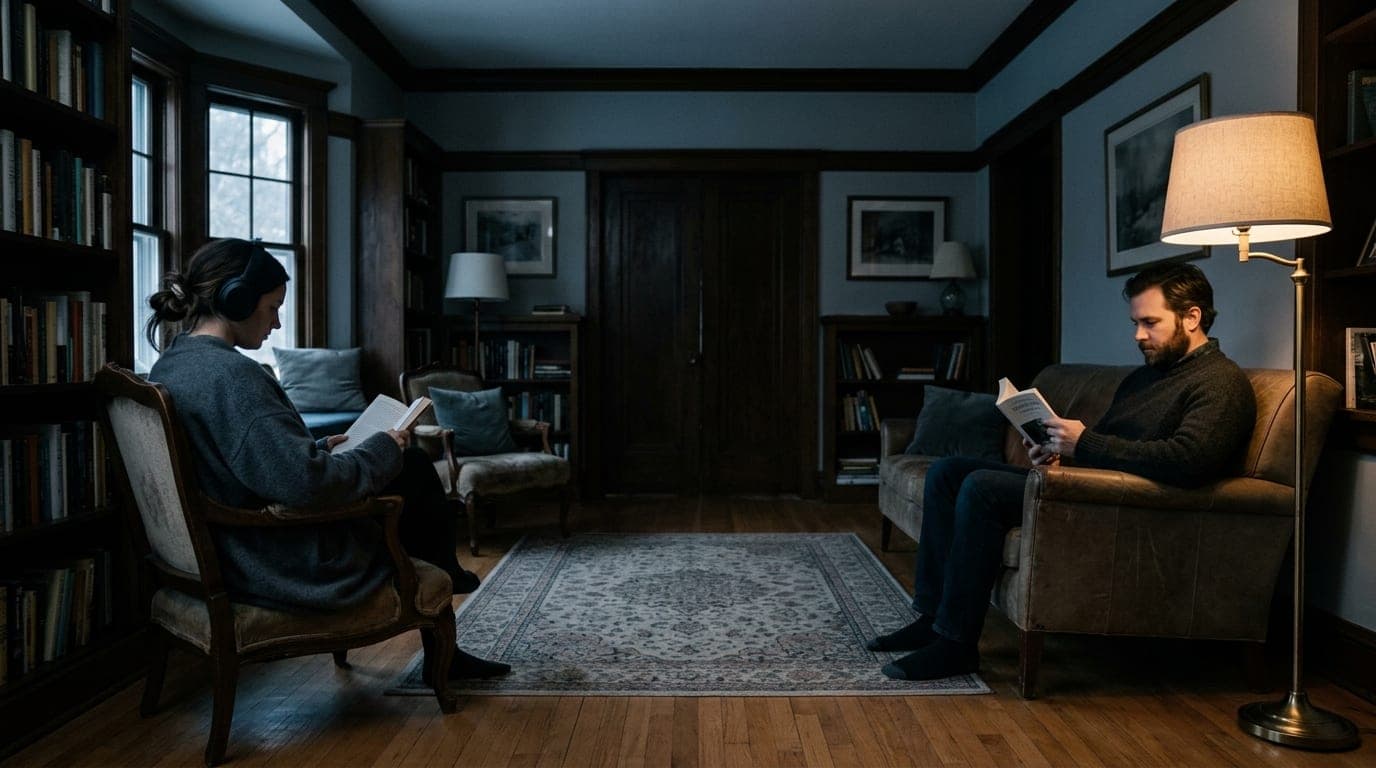
The-impact-of-parasocial-relationships-on-dating also creates a unique type of jealousy. It’s not the traditional "who is that texting you?" kind of jealousy. It’s a jealousy of attention. If one partner is spending three hours a night "hanging out" with a streamer, they are effectively bringing a third person into the relationship’s private time. This siphons off the emotional intimacy that should be used for debriefing the day or connecting before sleep. By the time the screen goes dark, the "parasocial partner" has already used up the user’s capacity for empathy and conversation, leaving the real-life partner with the emotional leftovers.
Grounding the Fantasy: Practical Steps to Reclaim Your Romance
The impact of parasocial relationships on dating requires a conscious "re-grounding" in the physical world to prevent digital intimacy from eclipsing real connections. It involves setting strict boundaries on content consumption and prioritizing active participation in your partner's life over passive consumption of a stranger's life. This shift ensures that your emotional resources are invested where they can be reciprocated.
The "Active vs. Passive" Audit: For every hour you spend watching a creator's life, spend an hour engaging in an active hobby or conversation with your partner. If you’re single, use that hour to engage in the "talking stage" more intentionally, using platforms like Set Adrift to facilitate deep, real-world dialogue instead of just scrolling.
Digital-Free Zones: Ban screens during dinner and in the bedroom. These are the two primary spaces where parasocial ghosts most frequently interrupt real-world intimacy. If you find yourself reaching for a streamer's VOD (Video On Demand) when your partner is trying to talk to you, it’s time to re-evaluate your priorities.
The "Unfiltered" Check-In: Once a week, remind yourself that the creator you admire is a business. They are a brand. Your partner is a person. Acknowledge that the creator’s "vulnerability" is often a calculated part of their monetization strategy, whereas your partner’s vulnerability is a genuine gift to you.
Redirect Your Investment: Take the money you might spend on a high-tier subscription or "donos" (donations) and put it into a "date fund." Investing financial resources into real-world experiences helps rewire your brain to value tangible memories over digital interactions.
By taking these steps, you mitigate the-impact-of-parasocial-relationships-on-dating by moving the creator back to the periphery of your life. You stop being a "subject" in their kingdom and start being a protagonist in your own romantic life. This is especially vital when using apps like Bumble or Hinge, where it’s easy to treat people like content to be swiped rather than humans to be met.
The Spectrum of Engagement: Healthy Fandom vs. Relationship Rot
The impact of parasocial relationships on dating isn't always negative; it exists on a spectrum from healthy entertainment to destructive obsession. Understanding where you or your partner falls on this spectrum is the first step toward protecting the health of your romantic future. Identifying the line between a hobby and a replacement for intimacy is crucial for long-term compatibility.
Pattern
Healthy Version
Red Flag Version
Time Spent
Watching a creator as a scheduled "unwind" time.
Prioritizing a stream over a planned date or sex.
Comparison
Admiring a creator's style or humor.
Criticizing a partner for not being as "funny" or "fit" as a streamer.
Financials
A small, budgeted monthly sub for entertainment.
Hiding "tips" or "donations" from a partner; financial strain.
Communication
Mentioning a funny video to a partner.
Feeling "betrayed" by a creator and taking that mood out on a partner.
In the context of the-impact-of-parasocial-relationships-on-dating, the "Red Flag Version" usually involves a degree of secrecy. If you feel the need to hide how much you are interacting with a digital persona, you are likely using that persona to fill a hole that should be addressed within your relationship or your own personal growth. Healthy dating on Match or eHarmony requires a high level of self-awareness; you cannot be fully present for a new match if you are emotionally tethered to a digital fantasy.
Furthermore, the physical aspect of relationships is often the first to suffer. If digital comparison leads to performance anxiety or body dysmorphia, men may find themselves looking at solutions like Bathmate to "keep up" with an imagined standard. The reality is that the "stamina" or "perfection" seen in digital media is often a result of editing and performance, not a standard for the average bedroom. Real intimacy is about the connection between two flawed bodies, not the replication of a digital ideal.
When to Walk Away: Recognizing Digital Infidelity
The impact of parasocial relationships on dating can reach a point of "digital infidelity" where the emotional bond with a creator becomes a replacement for the primary partnership. When a partner is more concerned with the approval, attention, or well-being of a distant creator than the person they live with, the relationship has entered a terminal phase that requires radical intervention or a clean break.
There is a specific kind of pain that comes from being ignored for a screen. If you find yourself constantly competing for your partner's attention against an influencer, you are in a three-way relationship where the third party doesn't even know you're there. This is a losing battle. As of August 2026, many relationship counselors are seeing an uptick in "parasocial-induced loneliness," where individuals feel more isolated inside a relationship than they did when they were single. The-impact-of-parasocial-relationships-on-dating here is a total erosion of the "us against the world" mentality. It becomes "me and my streamer against my partner’s nagging."
If you are in the talking stage and you notice your potential match is constantly referencing a creator as their "blueprint" for a partner, or if they seem to have no hobbies that don't involve a screen, take it as a serious warning sign. Use tools like Set Adrift to probe for deeper values—ask them about their real-world connections and their ability to handle conflict without retreating into digital comfort. If they can’t go an hour without checking a specific creator’s feed, they aren't ready for the demands of a real relationship.
"The digital world offers a version of love that is easy, edited, and entirely one-sided; real love is hard, unedited, and requires you to actually show up, even when the lighting is terrible and the 'stream' of your life is lagging."
Ultimately, the-impact-of-parasocial-relationships-on-dating is a test of our values. Do we value the convenience of a fantasy or the complexity of a human? We are wired for connection, but our brains can be easily tricked into accepting a counterfeit. In 2026, the most radical thing you can do for your dating life is to turn off the creators and turn toward the person sitting next to you. They might not have a million followers, and they might not have a catchphrase, but they are the only ones who can actually hold your hand when the lights go out. Stop let the digital elite dictate your heart's worth. Real intimacy is found in the gaps between the uploads, in the quiet moments that no one else is watching, and in the messy reality of being known—not by a million people, but by one person who truly cares.